How to Restore Good Bacteria After Antibiotics?
Antibiotics do not target only the harmful bacteria causing your infection. They affect all bacteria in your gut, both good and bad.
This disruption to the gut microbiome, the collection of trillions of bacteria living in your digestive tract, is what causes side effects like bloating, diarrhea, and gas after a course of antibiotics.
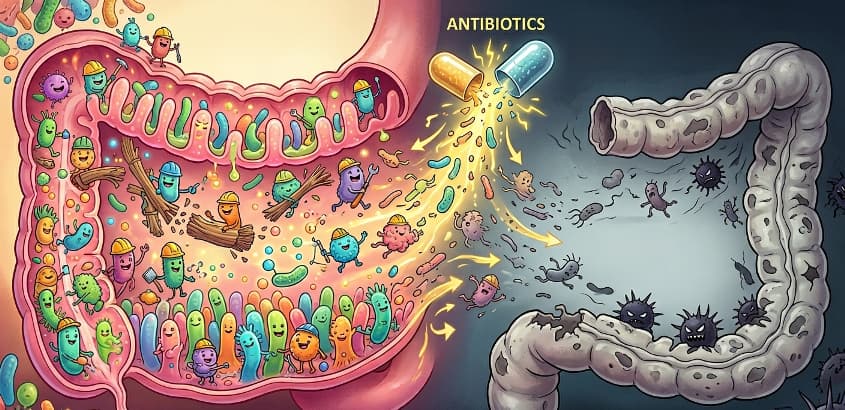
Friendly bacterial species such as Bifidobacterium and butyrate-producing bacteria drop sharply during treatment. At the same time, potentially harmful bacteria can multiply and fill the gap.
After broad-spectrum antibiotic use, levels of Bifidobacterium fell to nearly undetectable levels.
The good news: your gut can recover. The speed of recovery depends on your diet, your age, your stress levels, and how many previous antibiotic courses you have had.
Table of Contents
What Are the Effects of Antibiotics Killing Good Bacteria
When antibiotics wipe out good bacteria, your digestive system loses the workers that keep it running. The effects show up quickly, sometimes within 24 to 48 hours of starting a course, and can last weeks after you finish.
Here are the most common effects:
Diarrhea and loose stools: Good bacteria help regulate how fast food moves through your intestines. Without them, that process speeds up. Up to 35% of people taking antibiotics experience antibiotic-associated diarrhea.
Bloating and gas: Beneficial bacteria break down certain carbohydrates during digestion. When their numbers fall, undigested food ferments in the gut and produces excess gas.
Yeast overgrowth (thrush or vaginal yeast infection): Good bacteria normally keep Candida yeast in check. When those bacteria are reduced, Candida multiplies.
This is why yeast infections are a common side effect of antibiotic use, especially in women.
Weakened immune response: Around 70% of the immune system is based in the gut.
A disrupted microbiome means your body has fewer signals telling it how to respond to threats. People often notice they feel generally unwell, fatigued, or get sick more easily after a course of antibiotics.
Nutrient absorption problems: Beneficial bacteria produce vitamins including B12, B2, and vitamin K.
They also help absorb minerals like calcium and magnesium. A reduced bacterial population can lower the amount of these nutrients your body actually uses from food.
Increased risk of harmful bacterial overgrowth: With fewer good bacteria competing for space, harmful strains like Clostridioides difficile (C. diff) can take hold.
C. diff causes severe diarrhea and abdominal pain and requires medical treatment. It is rare but more likely after broad-spectrum antibiotic use.
Mood and energy changes: The gut and brain communicate constantly through the gut-brain axis.
A disrupted microbiome can reduce the production of neurotransmitters including serotonin, around 90% of which is made in the gut. Some people notice low mood, poor concentration, or low energy during and after antibiotic treatment.
Most of these effects are temporary and ease as gut bacteria recover.
See Also: Best Foods to Eat When You Have Diarrhea from Antibiotics
How Long It Takes to Restore Good Gut Bacteria
Recovery time is not the same for everyone. Research shows that most healthy adults recover close to their original microbiome composition within 1.5 months after finishing antibiotics. However, “close to” is not the same as “fully.”
A separate study found that about 60% of bacterial species diversity returns within two weeks after antibiotic use ends. The remaining diversity takes longer.
Most healthy adult gut microbiomes return to pre-treatment species richness after 2 months, but the exact mix of bacteria and their metabolic activity remains altered.
Factors that slow recovery:
- A history of multiple previous antibiotic courses
- Low bacterial diversity before treatment began
- A diet high in processed food and sugar
- High stress or poor sleep during recovery
- Older age, as older adults tend to recover more slowly
Step 1: Eat Probiotic Foods to Reintroduce Beneficial Bacteria
Probiotics are live, beneficial bacteria found in fermented foods. Eating them regularly after a course of antibiotics directly adds good bacteria back into your digestive system.
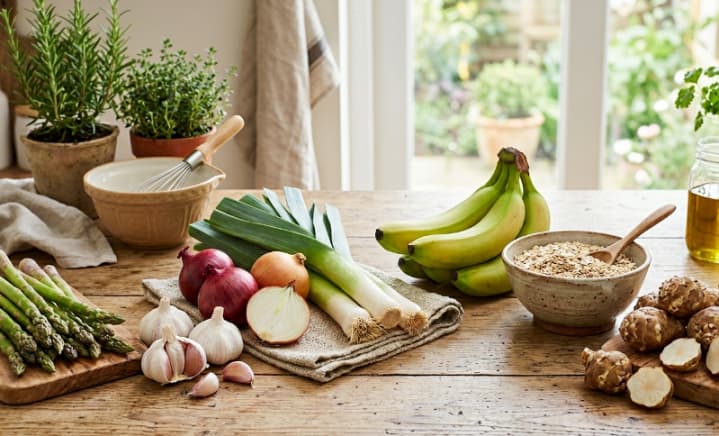
The best probiotic foods to eat after antibiotics:
- Yogurt (with live active cultures): One of the easiest and most accessible sources of Lactobacillus and Bifidobacterium strains.
- Kefir: A fermented milk drink with a broader range of bacterial strains than yogurt.
- Sauerkraut: Fermented cabbage that contains Lactobacillus bacteria. Buy unpasteurized versions, as heat kills live bacteria.
- Kimchi: A fermented Korean dish made from vegetables. It contains a range of Lactobacillus strains alongside fiber.
- Miso: A fermented soybean paste used in soups. It contains beneficial bacteria and digestive enzymes.
Aim to include at least one probiotic food per day during the first four to six weeks after finishing antibiotics.
If you prefer supplements, look for a multi-strain probiotic product. Multi-strain probiotics are more effective at reducing antibiotic-associated diarrhea than single-strain products.
One important timing note: Space probiotic supplements at least two hours away from your antibiotic dose if you are still mid-course. Taking them at the same time reduces their effectiveness because the antibiotic will reduce their count too.
Step 2: Eat Prebiotic Foods to Feed the Bacteria That Survived
Prebiotics are plant fibers your body cannot digest. They pass through your digestive tract and become food for the beneficial bacteria already living there.
Think of probiotics as adding new bacteria and prebiotics as feeding the ones already present.
The best prebiotic foods to eat after antibiotics:
- Garlic
- Onions
- Asparagus
- Bananas (especially slightly unripe ones)
- Oats
- Leeks
- Jerusalem artichokes
A good daily diet during recovery includes a mix of both probiotic and prebiotic foods. This combination works better than either one alone because the fiber from prebiotics helps the bacteria from probiotics to establish themselves and grow.
Step 3: Eat More Fiber and Plant-Based Foods
A wider variety of plant foods increases the diversity of bacterial strains in your gut.
Bacterial diversity is the single most important marker of a healthy gut microbiome. More diverse gut bacteria is linked to stronger immunity, better digestion, and lower risk of chronic illness.
Target at least 30 different plant foods per week during recovery. This does not mean 30 large portions.
It means counting the total number of different vegetables, fruits, legumes, wholegrains, nuts, and seeds you eat across the week. A handful of mixed nuts counts as multiple plant foods. A grain salad with five vegetables counts as six.
Foods high in polyphenols (plant compounds) also support beneficial bacterial growth. Good sources include blueberries, dark chocolate, green tea, extra virgin olive oil, and red cabbage.
Step 4: Avoid Foods That Disrupt Gut Recovery
Some foods slow down gut bacteria restoration or actively feed harmful bacterial strains. Cutting these out for four to six weeks after antibiotics gives your good bacteria a cleaner path to reestablish themselves.
| Food Category | Why It Hurts Recovery | What to Do Instead |
|---|---|---|
| Processed sugar | Feeds harmful bacteria like Candida | Choose fruit for sweetness |
| Ultra-processed snacks | Low in fiber, disrupt bacterial balance | Choose whole food snacks like nuts |
| Alcohol | Kills beneficial bacteria and damages gut lining | Avoid or limit during recovery |
| Refined carbohydrates (white bread, pastries) | Spike blood sugar and reduce bacterial diversity | Choose wholegrain alternatives |
Step 5: Take a Probiotic Supplement During and After Antibiotics
Probiotic supplements give you a reliable, consistent dose of specific bacterial strains. Not all supplements are equal. The most researched strains for antibiotic recovery include:
- Lactobacillus acidophilus: Helps restore Lactobacillus populations in the gut.
- Lactobacillus rhamnosus GG: One of the most studied strains for reducing antibiotic-associated diarrhea.
- Bifidobacterium longum: Helps restore Bifidobacterium, which drops sharply after antibiotic use.
- Saccharomyces boulardii: A beneficial yeast that survives antibiotic treatment and reduces gut side effects.
Take the supplement for the full duration of the antibiotic course and for at least two to four weeks after finishing. Continue longer if you still experience digestive symptoms.
Step 6: Support Recovery Through Sleep, Exercise, and Stress Reduction
Diet is the most direct tool for gut restoration, but lifestyle habits matter too. They create the conditions your gut needs to recover faster.
Sleep: Aim for 7 to 9 hours per night. Poor sleep reduces the diversity of gut bacteria and slows microbial recovery.
Exercise: Regular, moderate physical activity increases the number of beneficial bacteria in the gut.
Exercise can introduce more beneficial bacterial strains when harmful bacteria are overpresent. Walk, cycle, or do light yoga during recovery. Avoid intense training while still unwell.
Stress management: Chronic stress disrupts the gut-brain axis, which affects how well your gut microbiome functions and recovers.
Short daily stress-reduction practices like slow breathing, walking outside, or reducing screen time all support gut recovery.