What Should I Eat If I Have Diarrhea from Antibiotics? Foods That Help Fast
Table of Contents
Key Takeaways
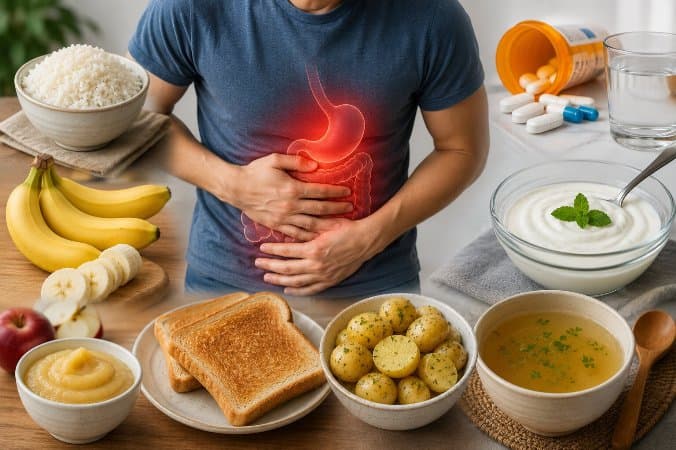
- Start with the BRAT diet (bananas, white rice, applesauce, plain toast) and add plain yogurt with live cultures to support gut bacteria recovery.
- Drink oral rehydration solutions, not just water, to replace electrolytes lost through diarrhea.
- Avoid dairy (except yogurt), fried food, caffeine, alcohol, and high-fiber vegetables until your stools normalize.
- Take probiotics at least 2 hours after your antibiotic dose to protect the beneficial bacteria.
- See a doctor if you have blood in your stool, fever, or diarrhea that continues more than 2 days after finishing your antibiotic.
What is Antibiotic-Associated Diarrhea and Why Food Matters
Antibiotic-associated diarrhea (AAD) is loose, watery stool that starts during or shortly after a course of antibiotics. It happens because antibiotics kill harmful bacteria but also kill beneficial bacteria in your gut at the same time. That loss of beneficial bacteria disrupts your digestive system.
Your food choices directly affect how fast your gut recovers. The wrong foods make diarrhea worse. The right foods reduce irritation, replace lost nutrients, and help beneficial bacteria grow back.
Why Do Antibiotics Cause Diarrhea?
Antibiotics do not target specific bacteria. They kill a wide range of bacteria throughout your gut. When the population of beneficial bacteria drops, harmful bacteria like Clostridioides difficile (C. diff) can multiply and cause inflammation, gas, and loose stools.
Some antibiotics are more likely to cause this than others. Amoxicillin, clindamycin, cephalosporins, and fluoroquinolones are the most commonly linked to AAD.
Best Foods to Eat When You Have Diarrhea from Antibiotics
Eat bland, low-fiber, low-fat foods that are easy for your gut to process. These foods reduce irritation and firm up loose stools.
The BRAT Diet: Bananas, Rice, Applesauce, Toast
The BRAT diet is a well-known starting point for digestive recovery. Each food in it is gentle on the gut and helps add bulk to loose stools.
- Bananas are easy to digest and contain pectin, a soluble fiber that absorbs excess water in the intestines and firms up stool. They also replace potassium lost through diarrhea.
- White rice (not brown) is low in fiber and absorbs water in the digestive tract, which helps reduce loose stools.
- Applesauce contains pectin like bananas and is gentler on the stomach than whole apples, which have more fiber.
- Plain white toast gives your gut something simple to work with. Skip butter or jam until you feel better.
The BRAT diet is not nutritionally complete on its own, so expand your food choices as soon as your symptoms improve.
Probiotic Foods That Help Restore Gut Bacteria
Probiotic-rich foods contain live beneficial bacteria that help repopulate your gut. Eating them during and after antibiotic treatment shortens the duration of AAD.
- Plain yogurt with live active cultures is the most practical probiotic food. Look for labels that say “contains live and active cultures.” Avoid sweetened or flavored yogurt, as added sugar feeds harmful bacteria.
- Kefir is a fermented milk drink with more probiotic strains than yogurt. It is easier to digest than regular milk for many people.
- Miso soup is a fermented soybean paste that contains beneficial bacteria. It also replaces sodium lost through diarrhea.
- Plain sauerkraut (unpasteurized, refrigerated type) contains live cultures. Avoid canned or cooked sauerkraut, as heat destroys the bacteria.
Start with small portions of probiotic foods. Eating too much too fast can cause gas and bloating while your gut is still sensitive.
Other Safe Foods to Eat During Antibiotic Diarrhea
Beyond the BRAT diet and probiotics, these foods are safe to eat and support recovery.
- Boiled or baked potatoes (plain, no skin) are starchy and gentle on the digestive tract.
- Plain oatmeal (cooked with water, not milk) provides soluble fiber that helps absorb water in the gut.
- Boiled chicken or fish provides protein without the fat load of fried meat, which makes diarrhea worse.
- Clear broth or soup replaces sodium and fluids lost through frequent stools.
- Crackers (plain saltine-style) are low in fat and easy for an irritated gut to handle.
What to Drink When Antibiotics Cause Diarrhea
Staying hydrated is the most urgent priority when you have diarrhea from antibiotics. Frequent loose stools cause rapid fluid and electrolyte loss, which can lead to dehydration.
Drink these throughout the day.
- Water is your baseline. Drink small amounts frequently rather than large amounts at once.
- Oral rehydration solutions (ORS) like Pedialyte or WHO-formula ORS replace both fluids and electrolytes (sodium, potassium, glucose) at the right ratio. Plain water alone does not replace electrolytes.
- Clear broth replaces sodium and is gentle on the stomach.
- Diluted apple juice or coconut water are reasonable options when ORS is unavailable.
- Herbal teas like chamomile or ginger tea can calm gut inflammation and are easy to tolerate.
Aim for at least 8 to 10 cups of fluid per day when you have active diarrhea.
Foods to Avoid When You Have Antibiotic-Associated Diarrhea
Several foods irritate an already inflamed gut or make diarrhea worse. Avoid these until your bowel movements return to normal.
| Food to Avoid | Why It Makes Diarrhea Worse |
|---|---|
| Dairy (milk, cheese, cream) | Antibiotics reduce lactase enzyme activity, making lactose harder to digest |
| Fried or greasy food | Fat stimulates gut contractions and speeds up stool transit |
| High-fiber vegetables (broccoli, cabbage, beans) | Insoluble fiber increases stool bulk and frequency |
| Spicy food | Capsaicin irritates the gut lining |
| Alcohol | Disrupts gut bacteria further and dehydrates you |
| Caffeine (coffee, energy drinks) | Stimulates gut movement and worsens loose stools |
| Artificial sweeteners (sorbitol, xylitol) | Draw water into the intestines and make diarrhea worse |
| Raw fruit with skin | Skin contains insoluble fiber that is hard to digest during recovery |
How to Take Antibiotics to Reduce Diarrhea Risk
What you eat matters, but how you take your antibiotic also affects your gut. These steps lower the chance of AAD starting in the first place.
- Take antibiotics with food unless your doctor says otherwise. Food slows absorption and reduces gut irritation.
- Take a probiotic supplement 2 hours after your antibiotic dose, not at the same time. Taking them together reduces the probiotic’s effectiveness because the antibiotic kills the probiotic bacteria before they reach the gut.
- Finish the full antibiotic course. Stopping early does not reduce diarrhea risk and can lead to antibiotic resistance.
- Ask your doctor about a different antibiotic if your current one causes severe digestive symptoms. Some are gentler on the gut than others.
When Antibiotic Diarrhea is Serious: Signs to Call a Doctor
Most antibiotic-associated diarrhea is mild and resolves within a few days of finishing the antibiotic. Some cases are serious and need medical attention.
Call a doctor right away if you notice any of these.
- More than 3 loose stools per day for longer than 2 days after finishing the antibiotic.
- Blood or mucus in stool. This can be a sign of C. diff infection, a serious complication of antibiotic use.
- Severe abdominal cramps or pain that does not ease between bowel movements.
- Signs of dehydration: dry mouth, dark urine, dizziness, no urination for 8 hours.
- Fever above 38.5°C (101.3°F) alongside diarrhea.
C. diff (Clostridioides difficile) infection affects about 500,000 Americans each year, and most cases are linked to antibiotic use. It requires separate antibiotic treatment and should not be managed with diet alone.