The Best Way to Massage a Shoulder Blade Knot for Instant Relief
Table of Contents
Key Takeaways
- To massage a knot out of your shoulder blade, apply firm, slow circular pressure directly on the tight spot for 30 to 60 seconds at a time, then release.
- Shoulder blade knots are tight bands of muscle fiber, most often found in the trapezius and rhomboid muscles, and they form mainly from poor posture and prolonged sitting.
- Heat applied for 10 to 15 minutes before massage loosens the tissue and makes the knot easier to release.
- You can self-massage using a tennis ball, foam roller, or massage stick without any professional help.
- If a knot does not improve after two weeks of home treatment, see a licensed massage therapist or physical therapist.
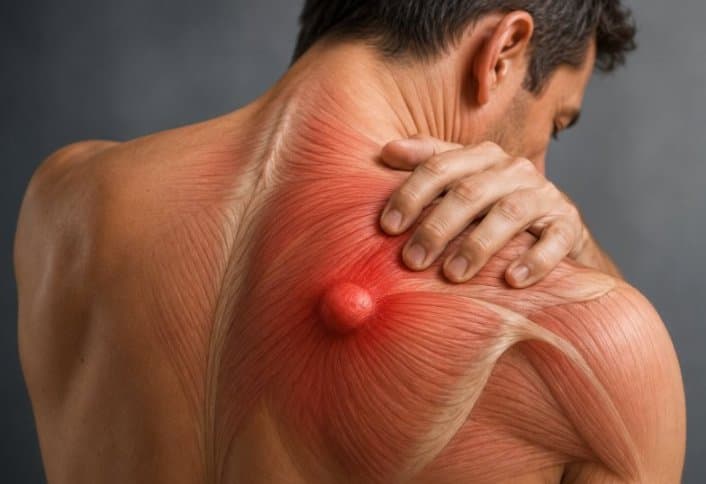
What a Shoulder Blade Knot Actually is?
A shoulder blade knot is a small, hardened area inside a muscle where the fibers have contracted and stayed locked in that position.
The medical term is myofascial trigger point, (also called a muscle knot). You can usually feel it as a pea-sized or marble-sized lump under the skin, and pressing on it often sends a dull, achy sensation to a nearby area.
The most commonly affected muscles are the trapezius (the broad flat muscle across the upper back and neck) and the rhomboids (the pair of muscles that pull the shoulder blades together).
Both muscles carry a lot of tension from everyday activity, which is why this area is one of the most common places people feel tightness.
What Does a Knot in a Muscle Look Like?
A muscle knot does not show on the skin’s surface. You find it by feel. When you press the area, the knot feels like a tight, ropey bump inside the muscle tissue.
It is noticeably firmer than the surrounding muscle. Pressing it often triggers a twitch response or refers pain to the neck, upper arm, or between the shoulder blades. This referred pain pattern is one of the clearest signs you have found a true trigger point.
What Causes Knots in Shoulder Blade Muscles?
Shoulder blade knots form when a muscle is held under tension for too long without rest. The most common causes are:
- Prolonged sitting and forward head posture. Sitting at a desk with your head pushed forward puts the trapezius under constant load. A study found that office workers who sat for more than six hours per day had significantly higher rates of upper trapezius trigger points than those who sat fewer hours.
- Repetitive one-sided movements. Typing, carrying a bag on one shoulder, or sleeping on the same side every night creates muscle imbalances that make one side tighten faster.
- Stress and shallow breathing. Chronic stress causes people to unconsciously elevate and tighten the shoulders. This sustained tension is a direct driver of trigger point formation.
- Dehydration. Muscle tissue needs adequate hydration to stay pliable. Dehydrated muscle fibers are more prone to seizing up and forming tight bands.
- Sudden overload. A heavy lifting session, a fall, or even a long drive can overload the shoulder muscles and trigger a knot immediately.
How to Massage a Knot Out of Your Shoulder Blade: Step-by-Step
To massage a knot out of your shoulder blade, follow these six steps in order. Skipping the warm-up step is the most common reason people feel no relief after self-massage.
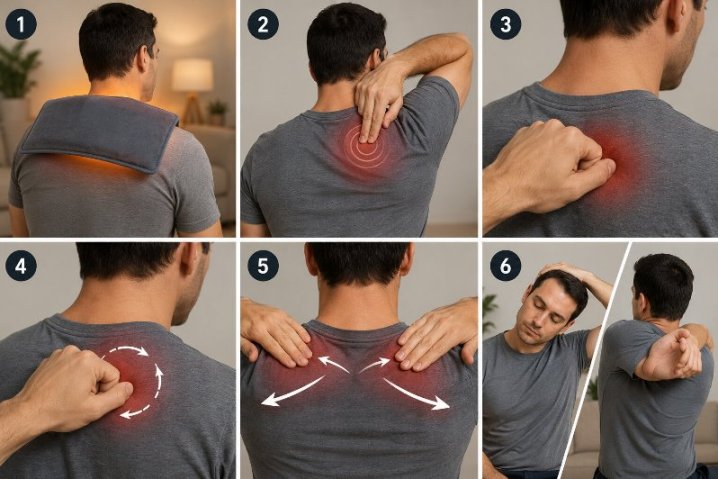
Step 1: Apply Heat for 10 to 15 Minutes
Place a heating pad or warm towel on the upper back before you start. Heat increases blood flow to the area and softens the muscle fibers so pressure can penetrate deeper.
Applying heat before soft tissue massage reduced post-massage soreness by 30% compared to massage alone.
Set the heat to a warm but comfortable level. Do not use high heat directly on skin for more than 15 minutes.
Step 2: Find the Knot with Your Fingers
Reach one hand over the opposite shoulder toward the shoulder blade. Use two or three fingertips to press slowly into the muscle.
Move in small, slow circles until you feel a spot that is noticeably tighter or that produces that distinctive dull, radiating ache.
If you cannot reach the area comfortably, lie on the floor and place a tennis ball between your upper back and the floor. Shift your weight slowly until you feel the tender spot.
Step 3: Apply Direct Sustained Pressure
Once you find the knot, press into it with firm, steady pressure. Hold that pressure for 30 to 60 seconds.
You want to feel a “good hurt”: a sensation that is uncomfortable but not sharp or unbearable. On a pain scale of 1 to 10, aim for a 5 or 6.
Do not jab or press and release quickly. Sustained pressure is what tells the nervous system to release the tension in that fiber bundle.
Step 4: Use Circular Friction Strokes
After holding the point for 60 seconds, shift to small, slow circular strokes directly over the knot. Apply enough pressure to move the skin and the tissue underneath together. Do this for 30 to 60 seconds.
This technique, called cross-fiber friction, breaks up adhesions in the muscle tissue and restores normal gliding between muscle layers.
Step 5: Broaden the Stroke Outward
After working the knot directly, use longer strokes that travel from the knot toward the spine and toward the neck. These effleurage-style strokes (long, sweeping strokes applied with moderate pressure) help flush the area with fresh blood and carry away waste products that built up in the tight tissue.
Do this for about two minutes on each side.
Step 6: Stretch the Area Afterward
End every session with a gentle stretch of the treated muscle. For the trapezius, sit upright and slowly tilt your head to one side, holding for 20 to 30 seconds.
For the rhomboids, hug both arms across your chest and round your upper back, holding for 20 seconds.
Skipping the stretch after massage leaves the muscle in a shortened position and the knot returns faster.
Best Self-Massage Tools for Shoulder Blade Knots
You do not need professional equipment to get effective results. These three tools each work well, and the right one depends on where your knot sits.
| Tool | Best For | How to Use |
|---|---|---|
| Tennis ball | Precise spot treatment | Place between back and wall or floor, shift weight onto the knot |
| Foam roller | Large-area tightness across the whole upper back | Lie on the roller, support your head, roll slowly side to side |
| Massage stick or theracane | Hard-to-reach spots near the spine | Hook the tool over your shoulder and apply downward pressure |
| Massage gun (percussive device) | Deep, quick release of large muscle bands | Set to low speed, hold on the knot for 15 to 30 seconds, move slowly |
A tennis ball pressed between your back and a wall gives you the most control over pressure and angle. It is the best starting tool for beginners.
How Often Should You Massage Shoulder Blade Knots
Massage a shoulder blade knot once or twice per day until it releases. Each session should last no more than 5 to 10 minutes on the same spot. Over-treating a trigger point causes local inflammation and makes the soreness worse, not better.
Most mild knots respond within three to five days of consistent treatment. Chronic knots that have been present for weeks or months may take two to three weeks of daily work to fully release.
Take at least one rest day between sessions if the area feels bruised or overly sensitive.
Why the Knot Keeps Coming Back After Massage
If your shoulder blade knot returns within a few days of massage, the root cause is still active.
Massage relieves the immediate tightness, but it does not fix the posture, movement habit, or stress pattern that created the knot in the first place.
The two most common reasons a knot keeps returning are:
- Unaddressed posture. Sitting with a forward head and rounded shoulders reloads the trapezius every hour you sit. Fix the ergonomic setup first: monitor at eye level, chair height so feet are flat, screen arm’s length away.
- No strengthening work. A weak lower trapezius and serratus anterior leave the upper trapezius to overwork. Adding two to three sets of shoulder blade retractions and face-pull exercises three times per week reduces the overload that creates knots.