Why Anterior Hip Replacement Isn’t Always the Best Choice
I no longer do anterior hip replacement because thigh numbness is common after it and the faster early recovery fades within about 12 weeks.
One prospective study found numbness in 31.9% of 122 hips. The trade off is real: the anterior approach has a lower dislocation rate than the posterior approach.
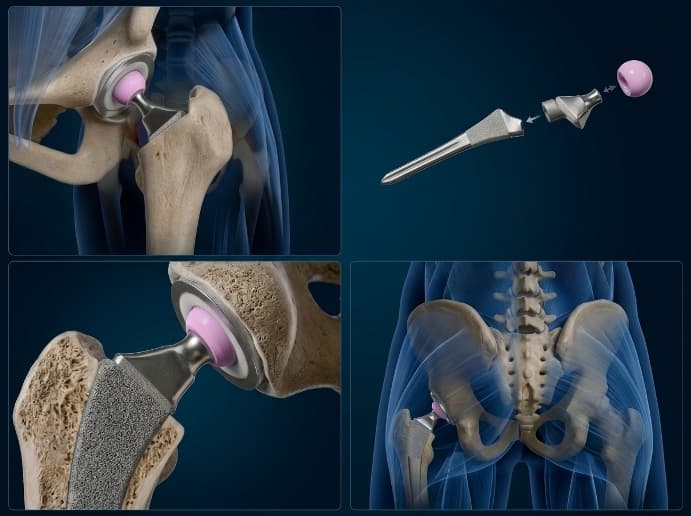
Table of Contents
What is Anterior Hip Replacement?
Anterior hip replacement is a total hip arthroplasty (THA) where the surgeon reaches the joint from the front of the hip. The surgeon works between two muscles, the tensor fasciae latae and the sartorius, instead of cutting through them.
Think of it as entering a house through the front door instead of the back. The route is shorter in some ways, but the front yard has its own hazards. In the hip, that hazard is a small sensory nerve that runs right across the work area.
The anterior approach is sometimes called the direct anterior approach (DAA).
How Common is Numbness After Anterior Hip Replacement?
Numbness on the outer thigh is the most common nerve problem after anterior hip replacement. It comes from injury to the lateral femoral cutaneous nerve (LFCN), a nerve that supplies sensation to the skin of the outer thigh. Reported rates range from 0% to 83%, depending on how studies look for it.
Studies that focused on this nerve found an average rate of 31%. Studies that did not focus on it found 3.8%. That gap suggests the problem is often missed when no one asks.
A prospective study of 122 hips found LFCN injury in 39 hips. Affected patients scored lower on the Forgotten Joint Score (50.9 versus 64.3, p = 0.01), a measure of how often a patient is aware of their new joint. Hip function scores did not differ.
A randomized trial of 200 patients found that a bikini style incision caused more LFCN injuries than a longitudinal incision. The cosmetic choice carried a nerve cost.
Most patients do not lose function. In a 2010 study, the numbness did not limit daily activity, but only a small number of patients reported complete recovery. For many people, numbness is a permanent small reminder of the surgery.
What Does the Evidence Say in Favor of the Anterior Approach?
The anterior approach performs well on several measures. A meta analysis of 19 studies, covering 6,620 patients in single center studies and 157,687 in registries, found lower rates of infection, dislocation, and reoperation with the anterior approach.
| Outcome | Rate ratio (anterior vs. posterior) | Result |
|---|---|---|
| Infection | 0.55 | Lower with anterior |
| Dislocation | 0.65 | Lower with anterior |
| Reoperation | 0.84 | Lower with anterior |
| Fracture | 1.0 | No difference |
| Wound complication | 0.93 | No difference |
| Patient reported nerve injury | 2.3 | Higher with anterior |
Two cautions apply. DePuy Synthes funded that analysis, and two authors were company employees. A larger review of 69 studies and 283,036 patients also found lower dislocation with the anterior approach (rate ratio 0.66), but rated the evidence as low or very low quality and concluded that surgeons can use the approach they know best.
Does Faster Early Recovery Last?
No, the recovery advantage is short. A meta analysis of 9 randomized trials covering 754 hip replacements found better Harris Hip Scores with the anterior approach at 2 and 4 weeks.
By 12 weeks and at 1 year, the scores were the same. The analysis also found no difference in operation time, intraoperative fracture, dislocation, heterotopic ossification (abnormal bone growth near the joint), or groin pain.
Two good weeks are worth something. They did not outweigh a risk of lasting numbness and a steep learning curve in my practice.
Which Approach Do I Use Now?
Patients who want the muscle sparing benefits of a front based approach have option to ask about. The anterior based muscle sparing (ABMS) approach works through the gap between the tensor fasciae latae and gluteus medius.
One study found LFCN dysfunction in 1% of patients at 1 year with ABMS, compared with a reported 7% to 32% for the direct anterior approach.
What Should You Ask Your Surgeon Before Hip Replacement?
Ask about experience with the specific approach, since general hip replacement volume says less. Surgeon volume and familiarity with a technique matter more than the technique’s reputation.
- How many hip replacements have you done with this approach?
- What is your own rate of numbness, fracture, and dislocation?
- Why do you recommend this approach for my body and my bone quality?
- What happens if a complication occurs during surgery?
Conclusion
Before I drop or keep any surgical approach, I ask one question: does the benefit last as long as the risk? For the anterior approach, the benefit lasts about 4 weeks, and the numbness can last years.
That answer changed my practice. It may not change yours, and a surgeon with high volume and low numbness rates in their own patients has a different answer.