Best Foods to Eat During Colitis Flare Up: What to Eat and Avoid
A colitis flare up is a period when ulcerative colitis symptoms become active again. The colon lining is inflamed. Common symptoms include diarrhea, cramping, urgency, and blood in stool.
Ulcerative colitis is a chronic inflammatory bowel disease (IBD). It causes ongoing inflammation in the colon and rectum. Flares can last days or weeks depending on severity.
Food does not cause ulcerative colitis. But certain foods can make flare symptoms worse. Choosing the right foods can reduce irritation and help the gut rest.
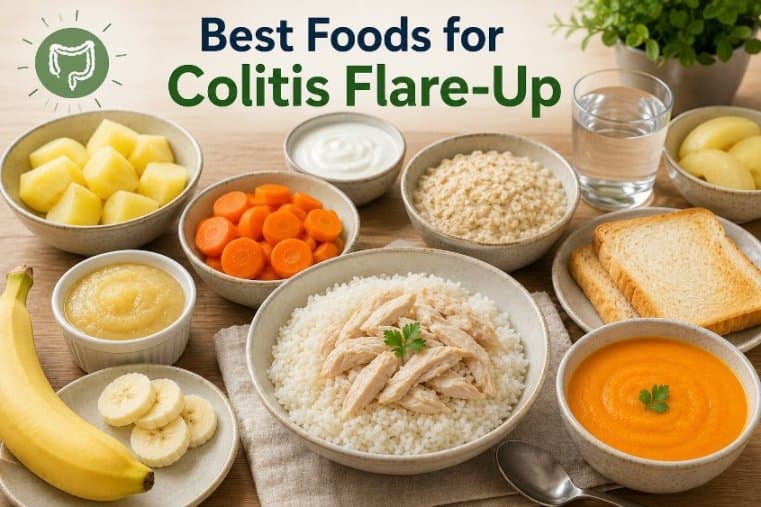
Table of Contents
Key Dietary Guidelines During a Flare
When your gut is acutely inflamed, shift your focus from complex fiber to easily digestible, nutrient-dense foods.
- Eat Small, Frequent Meals: Consuming 5 to 6 smaller meals throughout the day reduces the workload on your digestive tract compared to 3 large meals.
- Prioritize Soluble Fiber Over Insoluble Fiber: Remove peels, seeds, and tough skins from produce. Soft, gelatinous soluble fiber absorbs excess fluid to help form stool, whereas rough insoluble fiber physically irritates the colon lining.
- Replenish Lost Electrolytes: Persistent diarrhea rapidly depletes fluid, sodium, potassium, and calcium, increasing the risk of dehydration and fatigue.
- Focus on Anti-Inflammatory Proteins & Fats: Ensure adequate protein intake to rebuild damaged mucosal tissue and prevent muscle loss.
See This: What foods should we add to our diet after the age of 50?
Best Foods to Eat During a Colitis Flare
These foods are gentle on an inflamed colon. They are low in fiber and easy to digest.
| Food Group | Examples | Why It Helps |
|---|---|---|
| Refined grains | White rice, white bread, plain pasta | Low fiber. Easy to digest. Less bulk in stool. |
| Lean protein | Skinless chicken, turkey, eggs, tofu | Supports healing. Does not irritate the gut. |
| Cooked low fiber fruit | Ripe bananas, applesauce, cantaloupe | Gentle on the gut. Provides potassium. |
| Cooked vegetables | Peeled potatoes, carrots, squash | Cooking breaks down fiber. Easier to digest than raw. |
| Low fat dairy alternatives | Lactose free milk, yogurt with live cultures | May ease symptoms if lactose intolerant (Academy of Nutrition and Dietetics, 2023). |
| Hydration | Water, oral rehydration solutions, broth | Replaces fluid lost from diarrhea. |
Foods to Avoid During a Colitis Flare
Certain foods exacerbate muscle contractions, gas, and inflammation in the gastrointestinal tract. Eliminate the following until your doctor confirms remission:
| Food Type | Examples | Why to Avoid |
|---|---|---|
| Raw vegetables | Broccoli, kale, cabbage | High fiber. Hard to digest. Can worsen cramping. |
| Whole nuts and seeds | Almonds, sunflower seeds, flaxseed | Sharp particles can irritate inflamed tissue. |
| High fat or fried food | French fries, fried chicken, creamy sauces | Fat speeds up gut transit and worsens diarrhea. |
| Spicy food | Hot peppers, chili, hot sauce | Capsaicin can irritate the gut lining. |
| Caffeine and alcohol | Coffee, energy drinks, beer, wine | Both can stimulate the bowel and worsen urgency (Crohn’s & Colitis Foundation, 2024). |
| Sugar alcohols | Sorbitol, mannitol in sugar free gum | Poorly absorbed and can cause gas and diarrhea. |
Sample One Day Meal Plan for a Flare
- Breakfast: Scrambled eggs with white toast and a ripe banana.
- Mid morning snack: Applesauce with a small handful of saltine crackers.
- Lunch: Baked chicken breast with white rice and peeled, cooked carrots.
- Afternoon snack: Lactose free yogurt or a cup of broth.
- Dinner: Baked white fish with mashed potatoes, no skin.
- Evening: Herbal tea or water. Avoid caffeine close to bedtime.
This plan keeps fiber low and protein steady. Adjust portions based on appetite and tolerance.
How to Safely Reintroduce Foods After a Flare
A low-residue diet is a short-term therapeutic strategy, not a permanent lifestyle.
Staying on a low-fiber menu for too long can starve beneficial gut bacteria and lead to nutritional deficiencies.
- Wait for Symptom Resolution: Begin reintroduction only after bleeding, severe cramping, and urgency have completely subsided for several consecutive days.
- Add One Food at a Time: Reintroduce single foods in small portions every 2 to 3 days (e.g., adding oatmeal or cooked green beans).
- Keep a Food & Symptom Journal: Track what you eat and any digestive response to isolate personal trigger foods.
- Gradually Increase Fiber: Slowly transition toward a high-fiber, Mediterranean-style diet to promote long-term gut microbiome health during remission.
Frequently Asked Questions
Can I eat dairy during a colitis flare?
Some people tolerate dairy fine. Others find it worsens diarrhea, especially if lactose intolerant. Try lactose free milk or yogurt with live cultures first.
Is rice good for ulcerative colitis flares?
Yes. White rice is low in fiber and easy to digest. It is one of the most commonly recommended grains during an active flare.
Should I avoid all fiber during a flare?
Yes, during an active flare, stick to low fiber foods. Once the flare calms down, add fiber back slowly with guidance from a dietitian.
Can I drink coffee with ulcerative colitis?
Caffeine can worsen urgency and cramping during a flare. Many people switch to herbal tea or water until symptoms improve.
What should I eat for breakfast during a flare?
Scrambled eggs, white toast, and a ripe banana are gentle choices. Avoid high fiber cereals and raw fruit with skin.
Conclusion
A low-residue, low-fiber diet is an effective short-term strategy to relieve symptoms and support colon healing during an ulcerative colitis flare-up.
Once inflammation subsides, gradually reintroducing fiber is essential for restoring long-term gut health and preventing nutrient deficiencies.
Always work alongside your gastroenterologist or a clinical dietitian to safely customize your diet through every stage of UC.