Forearm Muscle Strain Physical Therapy: How to Speed Up Recovery
A forearm muscle strain is a tear in the fibers of one of the muscles that runs from the elbow to the wrist.
Doctors also call this a pulled muscle, and the two terms mean the same thing. The forearm has two main muscle groups involved: the flexors on the palm side that control gripping, and the extensors on the back of the arm that control wrist extension.
Most forearm strains come from overuse rather than a single traumatic event. Typing for long hours, gripping tools, lifting weights, and playing racket sports all place repeated load on these muscles.
When the load exceeds what the tissue can handle, the fibers stretch too far and tear.
Table of Contents
How Forearm Strains Are Graded?
A grade 1 strain involves minor stretching of a small number of fibers, with mild pain and no visible swelling.
A grade 2 strain involves partial tearing, moderate pain, and often some bruising or swelling. A grade 3 strain is a complete tear, marked by severe pain, major swelling, and a noticeable loss of function.
Grade matters because it sets the pace of rehab. A physical therapist will not push a grade 2 injury through the same timeline as a grade 1 injury, since doing so raises the risk of reinjury.
Check This: Best Hand Massagers for Arthritis Pain
What Causes a Forearm Strain?
Forearm strains build up from repeated stress or come on suddenly from one forceful movement.
Common triggers include heavy typing and mouse use, working with hand tools, climbing, weightlifting, and racket sports like tennis.
A sudden increase in training volume, poor wrist positioning, or fatigue can also push the muscle past its limit.
It helps to rule out other conditions before assuming a strain. Tennis elbow, carpal tunnel syndrome, tendon irritation, and even a stress fracture can produce similar forearm pain, so an accurate diagnosis matters before starting treatment.
How Physical Therapy Treats a Forearm Strain?
Physical therapy for a forearm strain moves through stages rather than jumping straight to strengthening.
The first stage calms pain and protects the tissue. The middle stage restores motion. The final stage rebuilds strength and prepares the arm to return to normal activity.
Activity Modification
A physical therapist identifies which movements aggravate the injury and adjusts them rather than telling a patient to stop moving entirely.
Gentle, pain free movement keeps blood flowing to the area and helps prevent stiffness while the tissue heals.
Manual Therapy
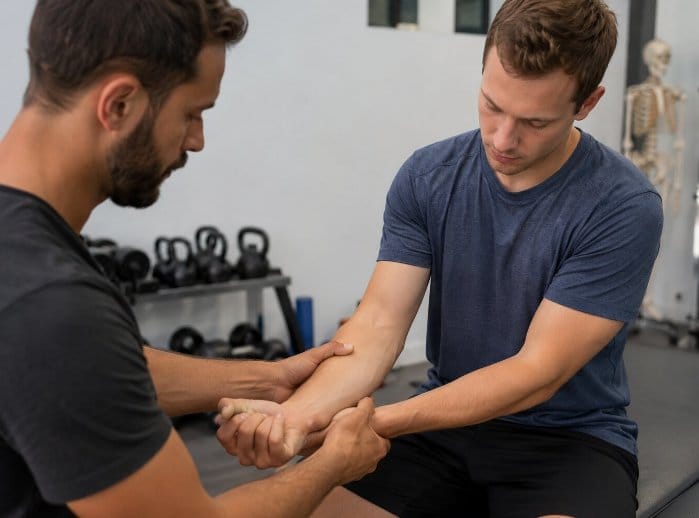
A therapist uses hands on techniques such as soft tissue mobilization, myofascial release, and joint mobilization to reduce tension and improve circulation in the injured muscle.
Manual therapy is often combined with other treatments rather than used on its own.
Modalities: Ultrasound and Electrical Stimulation
Ultrasound therapy delivers sound waves that create gentle heat inside the tissue, which increases blood flow and supports healing.
Transcutaneous electrical neuromuscular stimulation, known as TENS, uses low level electrical currents through adhesive pads to reduce pain and calm irritated nerves.
Stretching and Mobility Work
Once acute pain settles, a therapist introduces wrist flexion, wrist extension, and forearm rotation stretches to restore full range of motion.
Tight muscles around the injury site increase strain on the healing tissue, so mobility work reduces that added stress.
Progressive Strength Training
Strength work begins only after pain and swelling have eased. A therapist targets grip strength, wrist control, and shoulder stability, since weakness anywhere along the arm can shift extra load onto the forearm.
Ergonomic Adjustments
If the strain came from repetitive work tasks, a therapist evaluates the setup, such as keyboard height or tool grip, and recommends changes so the same pattern does not cause reinjury.
Recovery Timeline by Grade
| Grade | Description | Typical Recovery Time |
|---|---|---|
| Grade 1 | Mild strain, minor fiber damage | One to three weeks |
| Grade 2 | Moderate strain, partial tear | Three to six weeks |
| Grade 3 | Severe strain, complete tear | Three to six months, sometimes with surgery |
These windows are general patterns rather than a guarantee. A therapist sets the actual timeline based on a hands on exam of grip strength, range of motion, and pain response.
Conclusion
A forearm muscle strain responds well to a staged approach: calm the pain first, restore motion next, then rebuild strength before returning to full activity.
Physical therapy speeds that process and lowers the chance of the same muscle giving out again.
If pain lasts more than a few days or comes with numbness or weakness, get it checked before pushing through it.