Scar Hurt Years After Surgery: Common Causes and Effective Relief
A scar hurts years later mainly because the nerves inside it never fully settled after the original injury. Surgery cuts through skin, muscle, and small peripheral nerves, and some of those nerves regrow abnormally, get squeezed by scar tissue, or form a small tangled mass called a neuroma.
Scar tissue itself is not a passive, finished structure. It is living tissue that keeps remodeling for years, meaning density and structure inside a scar can change long after the skin looks fully healed. That ongoing change is why pain can appear, disappear, and return without any new injury.
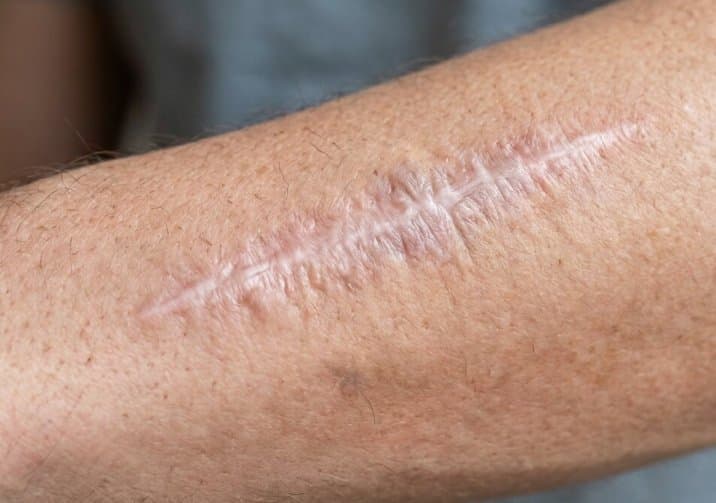
Doctors use the term chronic post surgical pain, or CPSP, for pain that continues for at least three to six months after an operation, once the expected recovery period has passed. CPSP is common after procedures like hernia repair, mastectomy, thoracotomy, and amputation.
Check This: Signs and Symptoms of Nerve Pain in the Knee
Table of Contents
Nerve Entrapment: When Scar Tissue Squeezes a Nerve
Nerve entrapment happens when thick scar tissue, also called fibrosis, wraps around a nerve and compresses it. The dense collagen fibers squeeze the nerve until it starts firing abnormal pain signals.
This type of pain usually feels sharp, shooting, or burning. Some people also develop allodynia, an intense sensitivity where even light touch, clothing, or a gentle breeze feels painful.
Entrapment can develop gradually. A scar that felt fine for the first year after surgery can start hurting later if surrounding muscles tighten with age, weight changes, or new physical activity, adding tension to the fixed, less elastic scar tissue.
Neuromas: A Small Growth of Tangled Nerve Fibers
A neuroma is a disorganized, noncancerous growth of nerve fibers that forms at the spot where a nerve was cut during surgery.
When a nerve is severed, it tries to regenerate, but the regrowing fibers can tangle into a small, highly sensitive knot instead of reconnecting normally.
Neuromas often feel like a distinct, painful lump under the skin. Pressure from clothing, sitting, or movement can trigger sudden, electrical, shock like pain.
This is the same mechanism behind Morton neuroma in the foot, where a nerve between the toe bones becomes thickened and irritated.
Neuroma pain can appear years after surgery because the nerve tissue keeps trying, and failing, to organize itself properly during that entire time.
Adhesions: Scar Bands That Restrict Movement
Adhesions are fibrous bands of scar tissue that cause separate layers of tissue, or even separate organs, to stick together.
They can form on the surface, in a visible skin scar, or deep inside the body after procedures like abdominal or gynecologic surgery.
During early healing, adhesions actually help stabilize the area. Once the initial inflammation settles, though, those same bands can restrict normal movement and pull on the surrounding tissue every time you stretch, bend, or twist.
Adhesion pain often shows up as tightness, a pulling sensation, or a deep ache during specific movements rather than constant, sharp pain. It tends to get worse over time if it goes unaddressed.
When Scar Pain Signals a Problem That Needs Medical Attention
Occasional tightness or mild soreness around an old scar is common and usually not a medical emergency. Contact a doctor if you notice any of the following:
- Pain that keeps getting worse instead of improving with home care over several weeks.
- A new, distinct lump forming at or near the scar.
- Numbness, tingling, or a burning sensation spreading beyond the scar itself.
- Pain severe enough to limit movement, sleep, or daily activities.
- Skin discoloration, warmth, or drainage near the scar, which can signal infection rather than nerve related pain.
A doctor can examine the area, review your surgical history, and order imaging if a neuroma or adhesion is suspected.
Conclusion
Scar pain years after surgery is rarely a sign that something went wrong during the original operation.
It is far more often a sign that the nerves and tissue inside the scar are still active, still remodeling, and sometimes still healing in ways that are not visible from the outside.
Paying attention to whether the pain is sharp and nerve like or more of a tight, pulling feeling can help your doctor better understand the problem and recommend the right treatment.