Walking Barefoot: Is it Beneficial Or Harmful?
Walking barefoot means moving without shoes or socks, allowing the entire sole of the foot to contact the ground directly. This direct contact activates over 100 muscles, tendons, and ligaments in each foot; structures that stay largely underused inside supportive footwear.
The human foot contains 26 bones, 33 joints, and more than 100 soft tissue structures. Shoes, especially those with thick soles and arch support, do much of the mechanical work those structures are designed to do. Over time, this can lead to weaker intrinsic foot muscles; the small muscles inside the foot responsible for balance and toe control.
Walking barefoot regularly reactivates those muscles. Think of it like removing a brace from a healed wrist: the joint gets stronger once it starts bearing its own load again.
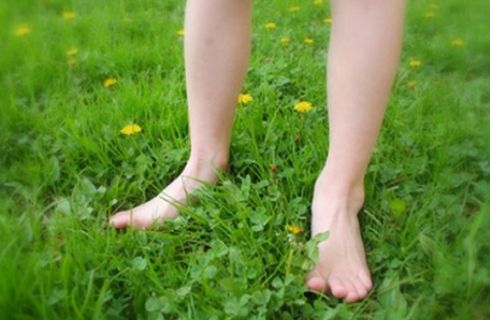
Table of Contents
The Proven Benefits of Walking Barefoot
Walking barefoot offers real, documented benefits for healthy adults when done on appropriate surfaces. The most consistent benefits reported in research are better balance, reduced muscle tension, and improved circulation.
How Barefoot Walking Reduces Back Pain
Walking barefoot changes how your foot strikes the ground. Shoes, especially cushioned ones, encourage heel-first striking, which sends impact force up through the ankle, knee, and lower spine.
Barefoot walkers naturally shift toward a midfoot or forefoot strike, which shortens the impact force reaching the lower back.
Over time, this altered gait pattern reduces chronic loading on the lumbar spine. Many physical therapists include short barefoot walking sessions in back rehabilitation programs for this reason.
How Barefoot Walking Improves Circulation and Reduces Varicose Vein Risk
When the full surface of the foot contacts the ground barefoot, the foot’s natural arch-pump mechanism works more efficiently. Each step slightly compresses the plantar venous network, a web of blood vessels in the sole, pushing blood back up toward the heart.
Shoes with rigid soles reduce this compression effect. Walking barefoot restores it, improving venous return (the flow of blood from the legs back to the heart). Better venous return lowers the pressure that contributes to varicose vein formation.
Why Barefoot Walking Relieves Neck Stiffness and Headaches
This benefit is less direct but well-supported. Tight calf muscles and poor posture from restrictive footwear create tension that travels up the posterior chain, the connected line of muscles running from the heel, up the back of the leg, through the spine, and into the neck.
Barefoot walking encourages a more natural posture and activates calf and ankle muscles more fully, reducing that upward tension. Regular sessions have been linked to decreased frequency of tension headaches in adults with chronic neck tightness.
How Barefoot Walking Cuts Stress and Activates the Nervous System
The sole of each foot holds thousands of nerve endings. When those nerve endings contact varied terrain; grass, sand, uneven ground; they send a high volume of sensory input to the brain.
This sensory stimulation activates the parasympathetic nervous system, which is the body’s rest-and-recovery mode. The result is a measurable drop in cortisol (the primary stress hormone) and a subjective sense of calm.
This effect is amplified when walking on natural surfaces outdoors, a practice sometimes called Earthing or Grounding.
Why Barefoot Walking Strengthens Foot Muscles and Prevents Sprains
The small intrinsic muscles of the foot, such as the flexor digitorum brevis and the abductor hallucis, play an important role in stabilizing the ankle during movement.
In shoes, these muscles do minimal work. Barefoot walking forces them to contract with every step.
Stronger intrinsic foot muscles mean better ankle stability, which directly reduces sprain risk. Children who grew up walking barefoot had significantly stronger foot muscles and lower ankle sprain rates than those who wore shoes full-time.
The Real Risks of Walking Barefoot
Walking barefoot carries genuine risks that depend entirely on surface and individual health status. The risks are manageable for healthy people on safe surfaces but they are not trivial.
Surface Hazards: Cuts, Punctures, and Burns
Hard, rough, or contaminated surfaces expose the foot to cuts and puncture wounds. Glass, nails, and sharp stones are the obvious hazards.
Less obvious: hot pavement in summer can reach surface temperatures of 60°C (140°F) on sunny days, enough to cause burns within seconds.
Vinyl and laminate floors are also unsuitable. They trap and reflect heat, causing the sole to overheat during extended walking.
Infection Risk on Public Surfaces
Public barefoot surfaces like gym floors, swimming pool areas, locker rooms, and communal showers; carry a high load of fungal and bacterial organisms.
The most common infections from barefoot contact on public surfaces are:
- Tinea pedis (athlete’s foot): A fungal infection causing itching, scaling, and cracking between the toes.
- Plantar warts: Caused by the human papillomavirus (HPV), typically contracted from wet public surfaces.
- Hookworm larvae: In warm, moist soil in tropical regions, hookworm larvae can penetrate bare skin on the foot.
Wearing footwear in public facilities eliminates all three risks.
Who Should Not Walk Barefoot
Barefoot walking is not safe for everyone. Avoid it entirely if you have:
- Diabetes: Diabetic neuropathy reduces sensation in the feet, making it impossible to feel cuts, burns, or pressure injuries. Even minor wounds can become serious infections.
- Peripheral neuropathy (any cause): Same reasoning as above; reduced sensation means reduced ability to detect injury.
- Open wounds, blisters, or active foot infections: Direct ground contact introduces bacteria into broken skin.
- Plantar fasciitis (in acute phase): Walking barefoot on hard floors without arch support can worsen plantar fascia inflammation.
- Very sensitive skin: Thin or reactive skin is more prone to abrasion and irritation from surface friction.
Best and Worst Surfaces for Barefoot Walking
Not all barefoot walking is equal. The surface determines most of the benefit-to-risk ratio.
| Surface | Safety | Benefits | Notes |
| Grass (clean, known area) | High | High – sensory stimulation, soft landing | Check for sharp objects first |
| Beach sand | High | High – resistance training for foot muscles | Wet sand near waterline is best |
| Indoor wood or tile floors | Medium | Moderate | Avoid if floor is dirty or slippery |
| Soil or dirt paths | Medium | High if clean | Risk of parasites in tropical regions |
| Hard pavement | Low | Low | Impact stress without sensory benefit |
| Hot pavement | Very low | None | Burn risk within seconds in summer |
| Public gyms or pools | Very low | None | High infection risk |
| Vinyl/laminate floors (extended) | Low | Low | Overheats sole |
Barefoot Walking for Children: What Podiatrists Recommend
Barefoot walking during early childhood actively supports healthy foot development. Children’s feet are still forming; bones are not fully calcified, and the arch does not fully develop until around age 6.
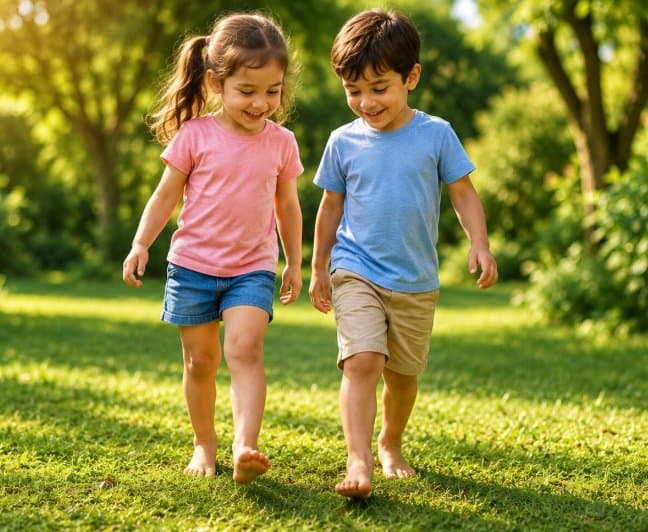
Walking barefoot on varied natural surfaces during this developmental window helps:
- Build the plantar arch naturally without artificial support.
- Develop proprioception (the body’s sense of its own position in space).
- Strengthen intrinsic foot muscles before the gait pattern becomes fixed.
Podiatrists do not recommend shoes for indoor use for toddlers learning to walk, unless the floor surface is unsafe. On hard, smooth indoor floors, non-slip socks are the right compromise; they protect against falls while keeping the foot’s natural contact with the surface.
Outside on rough or unknown surfaces, well-fitted shoes remain important for children.
How to Start Walking Barefoot Safely
Start with 15-20 minutes per day on a clean, soft surface and build up to 30-45 minutes over two to three weeks.
The foot muscles need a gradual adaptation period, jumping straight to long barefoot sessions on hard surfaces causes soreness and increases injury risk.
Follow these steps:
- Choose the right surface first. Start on grass or clean indoor flooring. Avoid pavement and public areas.
- Inspect the surface before walking. Check for glass, sharp objects, or animal waste.
- Start short and build gradually. Begin at 15 minutes, add 5 minutes every few days.
- Wash your feet after every session. Use soap and water, dry thoroughly between the toes to prevent fungal growth.
- Moisturise daily. Barefoot walking increases skin friction and dries the sole faster than walking in shoes. Use a urea-based foot cream to prevent cracking.
- Check your feet after each session. Look for redness, cuts, or blisters, especially if you have reduced sensation.