Dry Needling With Electrical Stimulation: Common Side Effects and Risks
Dry needling with electrical stimulation, often shortened to DNES, is a physical therapy technique that combines two treatments in one session.
A licensed therapist inserts thin, solid needles into tight muscle bands called trigger points, then clips small electrodes to the needles and runs a mild electrical current through them.
The needle alone releases tension by triggering a local twitch response in the muscle. Adding electrical current pushes that effect further.
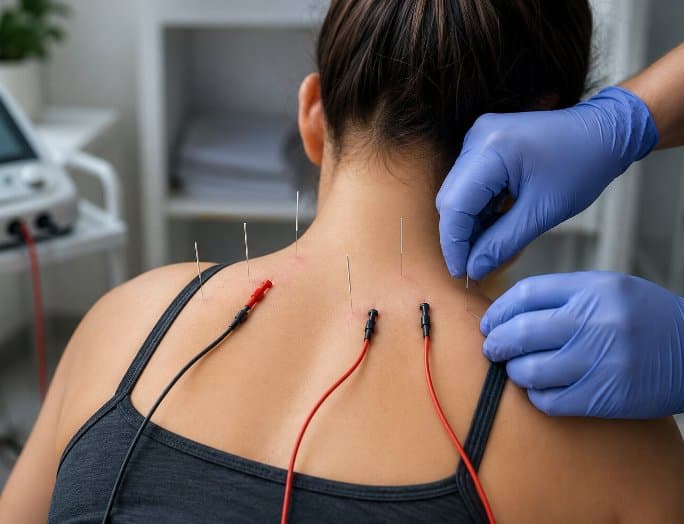
It stimulates nerve pathways and muscle fibers that needling by itself may not fully reach, which is why therapists often use it for chronic or stubborn pain.
DNES is different from transcutaneous electrical nerve stimulation, or TENS, where pads sit on the skin.
In DNES the current travels through the needle directly into the muscle tissue, which is a more targeted and generally stronger stimulus.
Table of Contents
Common Side Effects of Dry Needling With Electrical Stimulation
Most side effects are mild, local, and gone within 24 to 48 hours. They include soreness at the needle site, small bruises, brief fatigue, and occasional lightheadedness right after treatment.
Localized reactions, mainly soreness and bruising, were the most frequently reported outcomes, while more general reactions such as tiredness or a brief feeling of being unwell were less common but still present in a meaningful share of respondents.
Here is what shows up most often:
- Muscle soreness that feels similar to the ache after a hard workout, usually settling within one to two days.
- Small bruises where the needle entered, which fade on their own like any minor bruise.
- Short lived fatigue or a heavy feeling in the treated limb for a few hours after the session.
- Mild skin irritation or redness at the electrode contact points, which usually clears within hours.
- A brief drop in blood pressure that can cause lightheadedness, most common the first time someone tries the treatment.
None of these require treatment beyond rest, water, and light movement. Therapists typically advise walking and gentle stretching rather than staying still, since movement helps clear post treatment soreness faster.
Serious but Rare Risks to Know About
Serious complications from DNES are uncommon. The one most clinicians warn about is pneumothorax, a collapsed lung caused by a needle placed too close to the rib cage.
Pneumothorax happens when a needle punctures the thin membrane around the lung, letting air leak into the space between the lung and chest wall.
It is described across clinical literature as rare, but it is the complication clinicians train hardest to avoid, particularly when treating the upper back, shoulder, or chest wall muscles.
Warning signs include sudden sharp chest pain, shortness of breath, or a persistent dry cough that starts during or shortly after a session near the thorax. Anyone who notices these symptoms after treatment should seek emergency care right away.
Other rare but documented risks include:
- Nerve irritation if a needle passes too close to a nerve, which can cause a brief electric shock sensation, tingling, or numbness that usually resolves on its own.
- Fainting, especially in people who are needle averse or treated on an empty stomach.
- Infection at the needle site, which is extremely uncommon when single use, sterile needles are used correctly.
- Muscle twitching that continues briefly after the current is turned off, which is harmless but can feel unusual the first time.
See More: Swedish vs. Deep Tissue Massage: Side-by-Side Comparison
Who Should Avoid Electrical Stimulation During Dry Needling
People with implanted electrical devices, uncontrolled bleeding disorders, or certain pregnancy considerations should not receive the electrical stimulation portion of treatment, even if plain dry needling is otherwise appropriate for them.
| Condition | Why It Matters | What Usually Happens |
|---|---|---|
| Pacemaker or spinal cord stimulator | Electrical current can interfere with the device | Estim is skipped; needling alone may still be used with caution (OSI Physical Therapy, 2025) |
| Pregnancy | Certain points and the electrical current near the abdomen, low back, or pelvis are avoided | Therapists adjust treatment areas or wait until later in pregnancy |
| Bleeding disorders or blood thinners | Higher chance of bruising or prolonged bleeding at the needle site | Needling is done carefully or postponed until cleared by a physician |
| Fear of needles | Anxiety can trigger fainting or a strong stress response | Treatment is often declined or approached very gradually |
| Active infection, lymphedema, or compromised immune system | Needling near these areas raises complication risk | The affected area is avoided entirely |
| Seizure disorder | Electrical current may carry added risk | Estim is typically avoided; plain dry needling may still be an option |
Dry Needling Alone vs Dry Needling With Electrical Stimulation
Adding electrical stimulation increases the treatment’s intensity and its reach into deeper muscle and nerve pathways, but it also narrows who can safely receive it.
| Factor | Dry Needling Alone | Dry Needling With Electrical Stimulation |
|---|---|---|
| Typical soreness | Mild, one to two days | Similar, sometimes slightly more noticeable |
| Depth of effect | Local trigger point release | Reaches deeper muscle fibers and nerve pathways |
| Session length | Often faster | Usually longer, since the current runs for several minutes |
| Contraindications | Fewer restrictions | Added restrictions for pacemakers, spinal stimulators, and seizure disorders |
| Best suited for | Acute, localized muscle tightness | Chronic pain or cases needing stronger nervous system input |
How Long Side Effects Last and What Helps
Most soreness and bruising clear up within one to three days without any special treatment. Simple aftercare speeds recovery and lowers the chance of lingering discomfort.
Light activity, such as walking or gentle stretching, keeps blood moving to the treated muscle and tends to shorten soreness compared to staying still.
Warm compresses can help relax the muscle, while ice is sometimes used for visible bruising, though some therapists prefer to skip ice since the goal of treatment is to increase blood flow to the area.
Most clinicians recommend avoiding anti inflammatory medication like ibuprofen right after treatment unless a provider suggests it, since these drugs can blunt the body’s natural healing response. Staying hydrated and getting normal sleep also supports recovery.
If soreness has not eased after three to five days, or if it gets worse instead of better, that is a signal to call the treating clinic rather than wait it out.
Conclusion
Dry needling with electrical stimulation carries a side effect profile similar to many other physical therapy techniques: mostly mild, mostly short lived, and generally manageable at home.
Serious risks exist, but they are uncommon and tend to cluster around specific situations, namely treatment near the ribs and use of electrical current in people with implanted cardiac devices.
Anyone considering the treatment should share their full medical history with the treating therapist beforehand, since that conversation is what keeps the rare risks rare.