Swedish Massage vs Deep Tissue: Which One is Right for You?
Table of Contents
Key Takeaways
- Swedish massage is the right choice for relaxation, stress reduction, and general wellness. Deep tissue massage is the right choice for chronic pain, muscle knots, and injury recovery.
- The two techniques differ in pressure, stroke depth, and clinical intent – not just in how they feel.
- Both types are safe for most healthy adults. Deep tissue carries more contraindications and requires more communication with your therapist about pressure and tolerance.
- Soreness after deep tissue is normal for 24-48 hours. Soreness after Swedish is rare.
- If you have never had a professional massage, start with Swedish to build pressure tolerance before moving to deep tissue.
What is Swedish Massage and What Does It Do?
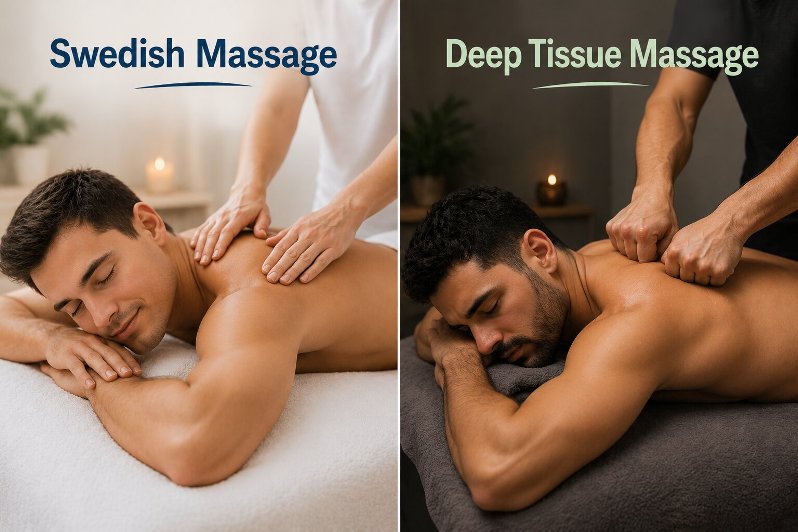
Swedish massage is a full-body technique designed to promote relaxation, reduce stress, and improve blood circulation. A licensed massage therapist applies oil or lotion and uses broad, flowing strokes across large muscle groups, typically moving in the direction of blood flow toward the heart.
The five core strokes used in Swedish massage are:
- Effleurage: Long, gliding strokes applied with the palm to warm up the muscle and spread oil.
- Petrissage: Kneading and squeezing movements that lift and roll the muscle to release surface tension.
- Tapotement: Rhythmic tapping or percussion using the fingertips or cupped hands to stimulate tissue.
- Friction: Small, circular rubbing movements applied with the thumbs or fingertips to target specific tight spots.
- Vibration: Fine, trembling movements applied to loosen muscle and calm the nervous system.
A standard Swedish session lasts 60 or 90 minutes. Pressure stays light-to-medium, and most people feel little discomfort during or after.
Who Should Get a Swedish Massage?
Swedish massage works best for people experiencing general stress and tension, first-time massage clients, anyone recovering from mild muscle fatigue, and people who want better sleep or a lower cortisol level.
A study published in the Journal of Alternative and Complementary Medicine found that a single 45-minute Swedish massage session significantly reduced salivary cortisol (a stress hormone) compared to a resting control group.
What is Deep Tissue Massage and What Does It Treat?
Deep tissue massage is a therapeutic technique that targets the deeper layers of muscle tissue and the fascia (the connective tissue surrounding muscles).
A therapist uses their thumbs, knuckles, forearms, and elbows to apply slow, firm strokes and sustained pressure directly into areas of tension.
The goal is to break down adhesions – tight bands of muscle fiber that form after injury, overuse, or prolonged poor posture. Adhesions restrict movement, reduce circulation, and cause chronic pain.
Deep tissue massage is commonly used to treat:
- Chronic lower back pain: The most common reason people seek deep tissue work.
- Neck and shoulder stiffness: Especially in office workers or anyone who sits at a desk for long periods.
- Sports injuries and muscle recovery: Athletes use deep tissue massage to speed up recovery after training.
- Sciatica and piriformis syndrome: Deep work on the hip rotators can reduce nerve compression symptoms.
- Repetitive strain injuries: Conditions like tennis elbow and carpal tunnel respond to focused deep tissue work.
Sessions typically run 60-90 minutes. Most people experience moderate discomfort during the session, especially on trigger points, and some soreness for 24-48 hours afterward. This is normal and not a sign of injury.
Is Deep Tissue Massage Painful?
Deep tissue massage can cause discomfort, but it should not cause sharp pain. “Good pain” is the term used by therapists to describe a deep pressure feeling that is both severe and bearable.
If you feel sharp, shooting, or burning pain, tell your therapist immediately so they can adjust. Drinking water after a deep tissue session helps flush out metabolic waste released from the muscles.
Swedish vs. Deep Tissue Massage: Side-by-Side Comparison
| Feature | Swedish Massage | Deep Tissue Massage |
|---|---|---|
| Pressure level | Light to medium | Medium to firm |
| Target area | Surface muscle layers | Deep muscle layers and fascia |
| Main technique | Long gliding strokes | Slow, concentrated strokes |
| Primary goal | Relaxation and circulation | Pain relief and muscle repair |
| Soreness after | Rare | Common (24-48 hours) |
| Session length | 60-90 minutes | 60-90 minutes |
| Average cost (60 min) | $60-$100 | $75-$120 |
| Best for | Stress, fatigue, general wellness | Chronic pain, injury, tight muscles |
| Good for first-timers? | Yes | With caution |
How Pressure and Technique Differ in Practice
The clearest way to understand the difference between Swedish and deep tissue massage is through pressure and intent. Coverage is the main focus of Swedish massage; the therapist works around the entire body in a steady, flowing rhythm. Think of it like a long car wash that cleans everything evenly.
Deep tissue massage prioritizes depth over coverage. In order to reach the deepest adhesion, the therapist may operate layer by layer for fifteen to twenty minutes on a specific location, such as the left trapezius muscle. It is targeted clinical work, not full-body relaxation.
Does Deep Tissue Massage Use the Same Strokes as Swedish?
Deep tissue massage builds on Swedish techniques but modifies them. Effleurage is still used to warm up tissue at the start of a deep tissue session.
The difference is what comes next – the therapist then uses cross-fiber friction (strokes applied perpendicular to the muscle fibers) and sustained myofascial release (held pressure into a knot) that are not part of a standard Swedish session.
Benefits of Swedish Massage vs. Benefits of Deep Tissue Massage
Both massage types deliver real, measurable benefits. The benefits differ based on the health goal.
Swedish massage benefits:
- Lowers cortisol and adrenaline levels, reducing physiological stress.
- Increases serotonin and dopamine, improving mood and sleep quality.
- Improves lymphatic drainage and blood circulation throughout the body.
- Reduces heart rate and blood pressure in people with mild hypertension.
Deep tissue massage benefits:
- Reduces chronic lower back pain more than standard medical treatment in some cases.
- Breaks down scar tissue after soft tissue injuries, improving range of motion.
- Lowers blood pressure – a study found that a single deep tissue session reduced systolic blood pressure by an average of 10.4 mmHg.
- Reduces delayed onset muscle soreness (DOMS) in athletes when applied within 48 hours of intense training.
When to Choose Swedish Massage Over Deep Tissue
Choose Swedish massage when your goal is relaxation rather than treatment. Specific situations where Swedish is the right call:
- You have general stress, anxiety, or trouble sleeping.
- You have not had a professional massage before and want to test your pressure tolerance.
- You are recovering from illness and want a gentle, circulation-boosting session.
- You want a full-body treatment rather than targeted work on one area.
- You are pregnant – prenatal massage is based on Swedish techniques and is generally safe after the first trimester with a trained therapist.
When to Choose Deep Tissue Massage Over Swedish
Choose deep tissue massage when you have a specific pain complaint, muscle tightness, or movement restriction. Situations where deep tissue is the right call:
- You have chronic pain in a specific area – lower back, neck, shoulders, or hips.
- You play sport or train regularly and carry accumulated muscle tension.
- You have a desk job and feel tightness between your shoulder blades or in your neck.
- A physical therapist or doctor has recommended therapeutic massage as part of a recovery plan.
- You have had Swedish massage before and consistently found the pressure too light.
Can You Get Both in the Same Session?
Yes. Many therapists combine Swedish and deep tissue techniques in a single session, often called a “customized” or “integrative” massage.
They use Swedish strokes to warm up the tissue and deep tissue work on specific problem areas. This approach suits people who want relaxation overall but have one or two tight spots that need focused attention.