How Do You Feel After Hyperbaric Oxygen Therapy?
Right after a hyperbaric oxygen therapy session, most people describe feeling calm, clear headed, and either energized or comfortably drowsy. Reactions vary from person to person, and even from one session to the next for the same person.
Many patients report feeling relaxed and invigorated once they step out of the chamber, along with sensations like a small energy boost, reduced pain, or slight drowsiness.
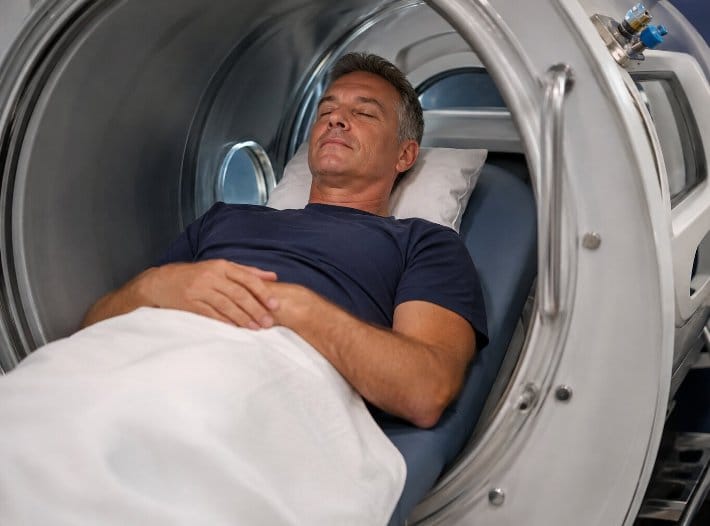
Others describe the feeling as similar to how you feel after a good massage, pleasantly tired rather than drained.
The pressurized oxygen environment can also leave you with a lingering sense of mental clarity. Some people compare the state during and after a session to a light meditation, since the mind has had over an hour with no phone, no noise, and no distractions.
Table of Contents
Why Do Some People Feel Tired After Hyperbaric Oxygen Therapy?
Post session fatigue happens because the body is working harder, not because something is wrong. Breathing 100 percent oxygen at increased pressure raises metabolic activity as tissues use that oxygen to repair cells and reduce inflammation.
This repair process takes energy. That is why some people feel a bit sleepy or worn out for a short time after a session, similar to the fatigue felt after a workout.
One clinic estimates that a 60 minute session can burn around 600 calories worth of metabolic effort, which helps explain the post session tiredness some patients notice.
For most people, this fatigue is mild and temporary. It typically clears up after a short rest and does not stop you from driving home or going back to work.
What Are the Most Common Physical Sensations After a Session?
The most common physical sensations after HBOT are ear pressure, mild lightheadedness, and occasional tingling in the fingers or toes.
These sensations are a normal response to the change in pressure and oxygen levels, not signs of a problem.
| Sensation | How Common | Typical Duration |
|---|---|---|
| Ear pressure or popping | Very common | Minutes, mainly during pressure changes |
| Lightheadedness | Common | A few minutes after exiting the chamber |
| Fatigue or sleepiness | Common | Under an hour, resolves with rest |
| Tingling in fingers, toes, or lips | Occasional | During or briefly after the session |
| Temporary blurry vision | Rare | Days to weeks, fully reversible |
| Hunger | Occasional | Shortly after the session |
Ear pressure happens as the chamber pressurizes and depressurizes, similar to what you feel on an airplane, and can usually be relieved by swallowing or yawning.
Mild lightheadedness after exiting the chamber is common but brief, and patients are generally able to continue with normal daily activities right afterward.
Can Hyperbaric Oxygen Therapy Cause Side Effects Beyond Feeling Tired?
Yes, though most documented side effects are mild and temporary. The two most frequently reported issues beyond fatigue are ear discomfort and short term vision changes.
A small number of patients develop temporary nearsightedness from pressure related changes in the shape of the eye lens. This usually resolves within six to eight weeks after treatment ends and does not require any correction.
People with diabetes may also experience a drop in blood sugar during a session, which is why blood sugar is checked before and after treatment.
More serious complications, such as oxygen toxicity seizures or lung irritation, are rare and mostly associated with longer or more frequent treatment protocols used for specific medical conditions.
Anyone with underlying lung or neurological conditions should discuss their personal risk with their treating physician before starting HBOT.
How Long Do the Effects of a Single Session Last?
The immediate effects of one HBOT session, like relaxation or a short burst of energy, typically last a few hours.
The therapeutic effects, such as reduced inflammation, tend to build gradually across a full course of treatment rather than appearing after a single visit.
Some people notice a difference in how they feel after their very first session, while others do not notice meaningful change until several sessions into their treatment plan, sometimes days or weeks later.
For visible healing goals, such as chronic wounds, noticeable results often begin closer to the tenth session.
This is why HBOT is usually prescribed as a series of sessions rather than a single appointment. A single dive is a small input into a longer, cumulative healing process.
Does How You Feel After HBOT Change Over Multiple Sessions?
Yes. Many patients report that early sessions feel more novel or come with more noticeable fatigue, while later sessions in a treatment course tend to feel more familiar and are followed by a steadier sense of energy and clarity.
As the body adjusts to repeated oxygen exposure, some people also notice their sessions leave them feeling less groggy over time. That said, providers sometimes build rest days into a weekly schedule specifically because fatigue and mild pulmonary symptoms can accumulate across many consecutive sessions.
If fatigue after a session gets worse rather than better as your treatment plan progresses, that is worth flagging to your provider rather than pushing through it.
Conclusion
How you feel after hyperbaric oxygen therapy depends on your body, your condition, and how many sessions you have completed.
For most people, that means walking out feeling relaxed, a little more energized, or pleasantly tired, sometimes with brief ear pressure or lightheadedness along the way.
Serious complications are uncommon and usually reversible. If any symptom lingers or worsens as your treatment continues, bring it up with your provider so your session plan can be adjusted.