Why Do I Have a Sharp Stinging Pain in the Toe Next to My Big Toe?
Sudden sharp stinging pain in the toe next to the big toe usually points to one of several specific conditions. The toe next to the big toe is called the second toe. It sits between the big toe and the middle toe.
The second toe carries a significant share of your body weight during walking and running. That load makes it more exposed to nerve pressure, joint stress, and injury than most other toes.
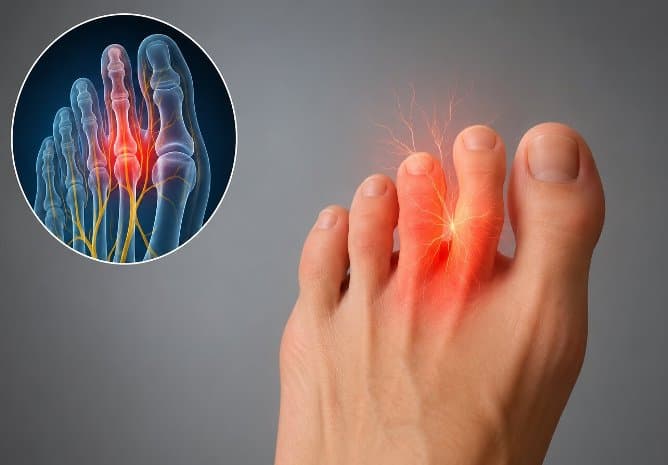
The most common causes are Morton’s neuroma, gout, capsulitis, stress fracture, ingrown toenail, and nerve entrapment. Each one produces a slightly different type of pain and comes with its own set of warning signs.
Table of Contents
Morton’s Neuroma: The Most Common Cause of Stinging Toe Pain
Morton’s neuroma is the most frequent cause of sudden stinging or burning pain between the toes. It is a thickening of the tissue around a nerve that runs between the toes.
The pain typically feels like a sharp sting, an electric shock, or the sensation of standing on a small stone. It most often appears between the second and third toes or the third and fourth toes. Pain in the toe next to the big toe from Morton’s neuroma usually radiates upward from the ball of the foot.
Who gets it: Morton’s neuroma is more common in women than men, at a ratio of roughly 8 to 1. High heels and narrow toe boxes are the leading triggers.
How to recognize it:
| Symptom | Morton’s Neuroma Sign |
|---|---|
| Type of pain | Sharp, burning, or electric shock sensation |
| Location | Between toes, starting at the ball of the foot |
| Trigger | Gets worse in tight shoes or after long walks |
| Relief | Improves when you remove shoes and rest |
| Other signs | Numbness or tingling in the affected toes |
Treatment: Wide shoes with low heels relieve pressure on the nerve. Metatarsal pads placed inside the shoe reduce nerve compression.
Cortisone injections reduce inflammation in moderate cases. Surgery is an option for severe cases that do not respond to conservative care.
Gout: When Sudden Stabbing Toe Pain Hits Without Warning
Gout causes one of the most sudden and intense forms of toe pain. It is a type of inflammatory arthritis caused by a buildup of uric acid crystals in a joint.
The big toe is the most famous target for gout. But gout attacks also frequently affect the second toe, the ankle, and the knee. The pain from gout often starts in the middle of the night with no warning at all.
How gout pain feels: The toe becomes intensely painful, hot, red, and swollen within hours. Even the light touch of a bed sheet can cause severe pain. This is one clear way to separate gout from most other causes of toe pain.
Who gets it: Gout affects around 9.2 million adults in the United States. Men between the ages of 30 and 50 are the most commonly affected group. Women become more exposed after menopause.
Common triggers for a gout attack:
- Eating large amounts of red meat, shellfish, or organ meats
- Drinking alcohol, especially beer
- Sugary drinks containing fructose
- Dehydration
- Certain medications including diuretics and low-dose aspirin
Treatment: Anti-inflammatory medications like ibuprofen or colchicine are the first-line treatment during an acute gout attack. Long-term management involves lowering uric acid through diet changes and, in some cases, medication like allopurinol.
Capsulitis: When the Joint Lining of the Second Toe Gets Inflamed
Capsulitis is inflammation of the small ligaments surrounding the joint at the base of the second toe. It produces a sharp, aching pain at the ball of the foot directly below the second toe.
The pain feels like you are walking on a pebble. It is often worst first thing in the morning and after standing for long periods.
How to recognize capsulitis:
- Pain and tenderness directly under the second toe joint
- Swelling at the base of the second toe
- The second toe may start to drift sideways toward the big toe over time
- Pain gets worse in bare feet on hard floors
Capsulitis does not usually come on without a reason. It is commonly linked to a long second toe (longer than the big toe), high arches, and tight calf muscles.
Treatment: Rest, taping the second toe in proper alignment, metatarsal pads, and stretching the calf muscles all reduce pressure on the joint. A podiatrist may recommend a custom orthotic for long-term relief.
Stress Fracture: When Bone Damage Causes Sharp Second Toe Pain
A stress fracture is a small crack in a bone caused by repeated force over time. In the foot, stress fractures most often affect the metatarsal bones, which are the long bones connecting the foot to the toes.
The second metatarsal is the most commonly fractured bone in the foot. A fracture here produces sharp pain at the base or shaft of the second toe that gets worse during activity and improves with rest.
Who is at risk:
- Runners and athletes who recently increased their training load
- People who stand on hard floors for many hours each day
- Women with low bone density
- Anyone who has recently changed footwear to flat, unsupportive shoes
How a stress fracture differs from soft tissue pain: Stress fracture pain has a very specific point of tenderness. Pressing directly on one spot of the bone causes sharp pain.
Soft tissue conditions like Morton’s neuroma tend to produce more diffuse pain across a wider area.
Treatment: Rest from impact activity for six to eight weeks is the standard approach for most metatarsal stress fractures.
A walking boot may be used for more severe cases. A bone scan or MRI gives a more accurate diagnosis than a standard X-ray in early stages.
Nerve Entrapment: When a Compressed Nerve Sends Shooting Pain to the Second Toe
Nerve entrapment in the foot means a nerve is being compressed or irritated somewhere along its path. The pain can appear as a sudden, sharp, shooting or stinging sensation that travels into the second toe.
The most common sites of nerve entrapment causing second toe pain are the tarsal tunnel (inside the ankle), the deep peroneal nerve on top of the foot, and local nerve compression from scar tissue or a tight shoe.
How nerve entrapment pain feels:
- Sudden electric shock or sting in the toe
- Pain that appears without any obvious trigger
- Numbness or tingling that travels from the foot into the toe
- Symptoms that worsen at night or after sitting for long periods
Nerve entrapment requires a proper diagnosis. A podiatrist or neurologist may order nerve conduction studies to identify exactly where the compression is occurring.
Treatment: Removing the source of pressure is the first step. This usually means changing footwear, addressing structural foot problems with orthotics, or treating any inflammation around the nerve with corticosteroid injections.
Ingrown Toenail: When the Nail Edge Causes Sudden Stinging Pain
An ingrown toenail on the second toe can cause a sudden, sharp, stinging pain along the edge of the nail. The nail grows into the surrounding skin instead of over it. This creates pressure, pain, and often infection.
Signs of an ingrown toenail:
- Redness and swelling along one or both sides of the nail
- Sharp pain when pressure is applied to the nail edge
- Drainage or pus if the area has become infected
- Skin that grows over the nail edge
Cutting toenails too short or in a curved shape is the leading cause of ingrown toenails. Tight shoes press the nail into the skin and make it worse.
Treatment: Soaking the foot in warm water for 15 to 20 minutes twice daily softens the skin and relieves pressure.
Gently lifting the nail edge and placing a small piece of cotton or dental floss under it can help the nail grow over the skin. A podiatrist can remove part of the nail for cases that do not resolve on their own.
When to See a Doctor About Sharp Toe Pain
Most causes of sudden sharp stinging pain in the toe next to the big toe are not medical emergencies. But certain signs mean you should see a doctor promptly.
See a doctor if you notice:
- Pain that is severe or makes walking impossible
- Significant swelling, redness, or heat in the toe or foot
- A fever alongside toe pain (this may signal infection or a gout attack)
- Numbness that does not go away after removing shoes
- Pain that lasts more than seven to ten days with no improvement
- A visible deformity or change in the shape of the toe
- Pain that follows a direct impact or fall on the foot
A podiatrist is the most relevant specialist for toe and foot pain. An orthopedic surgeon handles cases involving bone fractures or joint surgery.
How to Relieve Sudden Sharp Stinging Pain in the Second Toe at Home
Many causes of second toe pain respond well to simple home care. These steps apply to most non-emergency situations.
Step 1: Remove pressure immediately. Take off tight shoes and socks. Let the foot rest in a relaxed position. This alone will reduce pain from nerve compression and Morton’s neuroma within minutes.
Step 2: Apply ice. Wrap a bag of ice or frozen peas in a thin cloth. Place it on the painful area for 15 to 20 minutes. Do this up to three times in the first 24 hours after pain starts.
Step 3: Take an over-the-counter anti-inflammatory. Ibuprofen or naproxen reduces both pain and inflammation. Follow the dosage instructions on the label. Do not take these medications on an empty stomach.
Step 4: Wear wide, supportive footwear. Choose shoes with a wide toe box that give all five toes room to spread without pressure. Avoid pointed shoes and high heels until the pain resolves.
Step 5: Use a metatarsal pad. These inexpensive gel pads sit inside your shoe just behind the ball of the foot. They redistribute pressure away from the painful area. Most pharmacies carry them without a prescription.
Step 6: Rest from high-impact activity. Avoid running, jumping, and long walks until the pain has been gone for at least 48 hours.