Pinky Toe Hurt When Walking: Possible Causes and How to Find Relief
If your pinky toe hurts when you walk, the most likely cause is pressure from your shoes. Tight or narrow shoes squeeze the little toe against the shoe wall with every step, which leads to corns, a tailor’s bunion, or nail problems.
Shoe fit is a common problem: between 63% and 72% of people in footwear studies wore shoes that did not match the width or length of their feet.
The catch is that some pinky toe pain comes from a break in the toe or the long bone behind it, and those injuries can heal poorly if you keep walking on them.
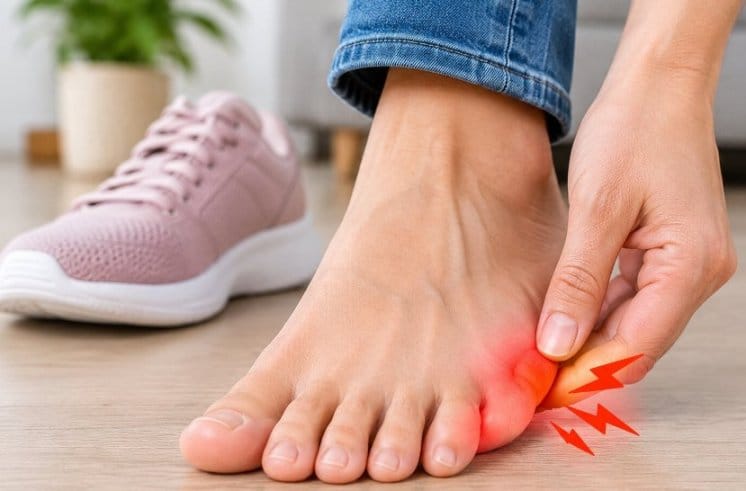
Why Your Pinky Toe Takes So Much Pressure When You Walk
Your pinky toe hurts when you walk because it sits at the outer edge of the foot, right where most shoes start to narrow. As you step, your foot spreads and rolls slightly outward. The little toe then presses into the side of the shoe again and again.
That repeated rubbing is the root of most pinky toe problems. Skin thickens into corns. Bone at the toe joint can build up into a bump. The toe itself can get pushed inward until it curls under its neighbor.
Shoe fit plays a large role here. A 2018 review of 18 studies found that most participants wore shoes that did not fit, and that poor fit was linked to foot pain and foot disorders.
A 2026 RMIT University study of 107 women found 72% wore a shoe size that differed from the size their foot length called for, and the researchers suggested many women size up to make room for foot width.
Toe pain is also common in general. Toe pain was reported in 12.2% of women’s feet and 7.1% of men’s feet.
Find the Cause by Where Your Pinky Toe Hurts
The exact spot that hurts is the fastest way to narrow down the cause. Press gently around the toe and compare what you find with the map below. Then check the matching section for details.
| Where it hurts | What you may see or feel | Likely cause |
|---|---|---|
| Edge of the toenail | Red, swollen, tender skin along the nail | Ingrown toenail |
| Top or outer side of the toe | Small, hard, cone shaped spot of thick skin | Hard corn |
| Between the fourth and fifth toes | Soft, white, rubbery spot that stays moist | Soft corn |
| Bony bump where the toe meets the foot | Bump on the outer edge of the foot, often red in shoes | Tailor’s bunion |
| The whole toe after a stub or impact | Bruising, swelling, toe looks crooked | Broken or sprained toe |
| Outer edge of the foot, behind the toe | Swelling and pain along the side of the foot | Fifth metatarsal fracture |
| The toe joint, with sudden heat and redness | Severe pain that starts fast, often at night | Gout or arthritis |
| Burning, tingling, or numbness | Pain without a visible bump or mark | Nerve problem, such as diabetic neuropathy |
More than one cause can show up at once. A tailor’s bunion, for example, often comes with a corn on top of it because the bump rubs against the shoe.
Tailor’s Bunion: A Bony Bump at the Base of the Pinky Toe
A tailor’s bunion is a bony bump on the outside of the foot at the base of the pinky toe. It is also called a bunionette. It forms at the fifth metatarsophalangeal (MTP) joint, which is where the toe meets the foot.
The bump develops when long term pressure pushes the joint out of line. Narrow or pointed shoes are a common source of that pressure.
Other causes include inherited foot shape, long hours of standing, and inflammatory conditions like rheumatoid arthritis or lupus. Women are more likely to get one.
The name comes from tailors of past centuries, who sat cross legged for hours. That position pressed the outer edge of their feet into the floor.
Signs You Have a Tailor’s Bunion
The main sign is a visible bump at the base of the little toe. Pain is usually worst in shoes and better when you go barefoot. You may also notice swelling, redness, or a corn or callus over the bump.
How a tailor’s bunion is treated
Most people manage a tailor’s bunion without surgery. These options:
- Shoes with a wide, deep toe box, or stretching the shoes you already own.
- Bunion pads and taping to cushion the bump and hold the toe in place.
- Orthotic inserts and toe spacers.
- Ice wrapped in a towel, and nonprescription pain relievers like ibuprofen for no more than 10 days in a row without talking to a doctor.
Surgery is the only way to remove the bump fully. Doctors usually suggest it when other treatments fail or walking becomes very painful. Most people return to normal activity within a few months after surgery.
Corns: Hard or Soft Spots That Hurt With Every Step
Corns are small areas of thick skin that form where the pinky toe rubs against a shoe or another toe.
They hurt when pressed, so walking in shoes makes them sting. Corns are smaller and deeper than calluses and have a hard center.
The pinky toe gets two kinds of corns. Hard corns form on the top or outer side of the little toe, where it presses against the shoe. This is one of the most common spots for hard corns on the whole foot.
Soft corns form between the toes, most often between the fourth and fifth toes. Sweat keeps them moist, so they stay white and rubbery. They can be very painful.
Why Corns Form on the Little Toe
Corns are the skin’s normal response to steady pressure or friction. The main causes are poorly fitting shoes, foot shape problems that put extra pressure on one spot, and high activity levels.
Loose shoes can cause them too, because your foot slides and rubs inside the shoe.
How To Get Rid of a Pinky Toe Corn
For most people, a corn fades once the pressure stops. Switch to roomier shoes. Cover the corn with a doughnut shaped pad, and use a toe separator or lamb’s wool between the toes for a soft corn.
Be careful with medicated corn pads. They contain salicylic acid, which can irritate healthy skin and lead to infection. People with diabetes or poor blood flow to the feet should skip them and see a doctor instead.
A Broken or Sprained Pinky Toe After a Stub or Impact
If your pinky toe started hurting right after you stubbed it or dropped something on it, it may be broken or sprained.
The little toe sits on the outer edge of the foot, so it catches furniture legs and door frames more often than the other toes.
A broken toe causes pain, swelling, and bruising. The pain gets worse when you walk or put weight on the foot.
The toe may also look crooked. A sprain looks similar, and an X-ray is often the only way to tell the two apart.
How a Broken Pinky Toe Heals
A simple break in a small toe is usually treated by taping it to the fourth toe. This is called buddy taping, and the healthy toe works as a splint.
Put gauze or felt between the toes first to protect the skin. A stiff soled shoe can also limit movement and leave room for swelling.
Most broken toes heal within 4 to 6 weeks. The toe may still ache and swell for 3 to 6 months. Raise your foot above heart level and ice it for about 15 minutes at a time to cut down swelling.
See a doctor if the toe points in an odd direction, the skin is broken, or you cannot walk on it. A toe that heals out of line can raise your risk of arthritis in that joint later.
Fifth Metatarsal Fracture: Pain on the Outer Edge of the Foot
If the pain sits behind your pinky toe along the outer edge of your foot, the problem may be the fifth metatarsal. This is the long bone that connects the pinky toe to the rest of the foot. Fractures of this bone are fairly common.
Symptoms include pain, swelling, bruising, tenderness, and trouble walking, all along the outer side of the foot. People often confuse this pain with a toe problem because it spreads toward the little toe.
Three Types of Fifth Metatarsal Fracture
- An avulsion fracture happens when a tendon or ligament pulls a small piece of bone away, usually when you roll your ankle. These breaks are often missed when they happen with an ankle sprain.
- A Jones fracture is a break in an area of the bone with a poor blood supply. It heals slowly and sometimes needs surgery.
- A stress fracture is a tiny crack from repeated stress, common in runners and dancers. The pain builds slowly and gets worse with activity.
Do not walk off pain in this area. Most fifth metatarsal fractures heal with rest, a walking boot, or a cast, but a Jones fracture can fail to heal if you keep loading it. An X-ray, or sometimes an MRI, confirms the diagnosis.
Ingrown Toenail on the Pinky Toe
An ingrown toenail happens when the side or corner of the nail grows into the skin. It causes pain, red skin, swelling, and sometimes infection.
Ingrown nails most often affect the big toe, but tight shoes can push the small, curved pinky nail into the skin too.
Shoes press on the nail fold with each step, so an ingrown pinky nail hurts most when walking. Common causes include shoes that crowd the toes, cutting nails too short or rounding the corners, toe injuries, and naturally curved nails.
Soak the toe in warm water a few times a day and wear open or roomy shoes while it settles. From now on, trim nails straight across to prevent a repeat. See a doctor if you notice pus, spreading redness, or if you have diabetes.
Bent or Curled Pinky Toe: When the Toe Itself Changes Shape
A pinky toe that curls inward, tucks under the fourth toe, or bends at a joint can hurt when you walk. The bent part rubs against the shoe and the ground, which causes pain, stiffness, and corns.
Hammertoe and mallet toe are the best known toe bending problems. They usually affect the second, third, or fourth toes, but the pinky can curl in a similar way. A tailor’s bunion can also push the little toe inward until it rides over or under its neighbor.
High heels and shoes that are tight in the toe area crowd the toes so they cannot lie flat. Over time, the toe may stay curled even out of shoes. Women are more likely to develop these problems than men.
While the toe can still be straightened by hand, roomier shoes, pads, taping, and toe exercises often help. Picking up marbles or scrunching a towel with your toes. If the toe becomes rigid and painful, surgery can correct it.
Gout and Arthritis in the Small Toe
Gout and arthritis can cause pinky toe pain, though they are less common causes than shoes or injuries.
Gout is a type of arthritis caused by uric acid crystals building up in a joint. It most often strikes the big toe, but it can affect other joints in the foot.
A gout attack starts suddenly, often overnight. The joint becomes very painful, swollen, red or discolored, and tender to the touch. Gout is three times more common in males.
Wear and tear arthritis (osteoarthritis) and rheumatoid arthritis can also affect the small toe joints.
Arthritis pain is usually stiff and achy, worse in the morning or after rest, and builds over months rather than hours. A doctor can confirm gout or arthritis with a physical exam, blood tests, imaging, or a sample of joint fluid.
Burning or Numb Pinky Toe Pain: Nerve Causes
If your pinky toe burns, tingles, or feels numb when you walk, and you cannot see a bump or a mark, the problem may be in the nerves. Nerve pain often feels like pins and needles and can get worse at night.
Diabetes is the most common cause of nerve damage in the feet. Damaged nerves can cause numbness, tingling, or pain, and they can lower your ability to feel pain at all. That means a corn, blister, or small cut on the pinky toe may go unnoticed and get infected.
If you have diabetes, check your feet every day, including between the toes. The CDC advises looking for cuts, redness, swelling, blisters, corns, and calluses, and using a mirror if you cannot see the bottom of your feet. Do not treat corns on your own with medicated products.
Sudden Pain vs Pain That Builds Slowly: What the Timing Tells You
How your pinky toe pain started is the second best clue after its location. Sudden pain usually means an injury or gout. Pain that builds over weeks usually means pressure or wear.
| How the pain started | Most likely causes | What to do first |
|---|---|---|
| Right after a stub, drop, or rolled ankle | Broken or sprained toe, fifth metatarsal fracture | Ice, raise the foot, and get an X-ray if you cannot walk normally |
| Overnight, with no injury, joint red and hot | Gout | See a doctor within a day or two |
| Slowly, worse in certain shoes | Corn, tailor’s bunion, ingrown nail, bent toe | Change shoes and pad the sore spot |
| Slowly, worse with running or long walks | Stress fracture | Rest and see a doctor if it does not ease in a week |
| Burning or numb, with no visible change | Nerve damage | See a doctor, especially if you have diabetes |
How to Ease Pinky Toe Pain at Home
Most pinky toe pain from shoes improves within days to weeks once you remove the pressure. Start with your footwear, because no pad or cream will help if the shoe keeps squeezing the toe.
- Check your shoe fit. If you cannot wiggle your toes, your shoes are too tight. Look for a wide, rounded toe box and low heels.
- Shop late in the day. Feet swell as the day goes on, so shoes bought in the evening fit better. Measure both feet and buy for the larger one, since foot width can change with age.
- Pad the sore spot. Use a doughnut shaped pad over a corn or bunion and a toe separator between the fourth and fifth toes.
- Ice and raise the foot. Wrap ice in a towel and apply it for about 15 minutes. Prop the foot above heart level to reduce swelling.
- Use pain relievers briefly. Nonprescription options like ibuprofen or acetaminophen can help. Do not use NSAIDs for more than 10 days in a row without talking to a doctor.
- Ask a shoe repair shop to stretch your shoes. They can widen a shoe at the exact spot that rubs your little toe.
When to See a Doctor for Pinky Toe Pain
See a doctor or podiatrist if your pinky toe pain lasts more than two weeks or makes it hard to walk. Get care sooner for any of these signs:
- You cannot put weight on the foot, or the toe looks crooked after an injury.
- Pain and swelling sit along the outer edge of the foot behind the toe.
- The toe is red, hot, oozing pus, or the redness is spreading.
- A sudden, severe joint pain started overnight without an injury.
- You have diabetes or poor circulation and notice any sore, corn, or color change.
- The toe turns cold, blue, gray, numb, or tingly after an injury. This needs emergency care.
A doctor will usually press on the toe, check how you walk, and look at your shoes. An X-ray shows fractures, bunions, and joint changes. An MRI may be used if a stress fracture is suspected.
Frequently Asked Questions
Why does my pinky toe hurt when I walk but not when I rest?
Walking presses the pinky toe against your shoe and the ground, so pressure problems hurt most during movement. Corns, tailor’s bunions, and ingrown nails often feel fine at rest and sting once you put shoes on. A fracture also hurts more with weight on it.
Can tight shoes really cause pinky toe pain?
Yes. Tight or narrow shoes are the most common cause of pinky toe pain. They lead to corns, tailor’s bunions, ingrown nails, and a curled toe over time. A 2018 review found most people wear shoes that do not match their foot width or length (Journal of Foot and Ankle Research, 2018).
How do I know if my pinky toe is broken or just bruised?
You often cannot tell without an X-ray. A broken toe usually causes strong pain right after the injury, swelling, bruising that spreads, and trouble walking. If the toe looks crooked or you cannot bear weight, see a doctor.
Can I walk on a broken pinky toe?
Many people can walk on a simple broken pinky toe with buddy taping and a stiff soled shoe. Pain is your guide, so limit walking while it heals. If the pain sits in the outer foot rather than the toe, stop and get checked, because a fifth metatarsal fracture may need a boot or cast.
How long does pinky toe pain take to go away?
It depends on the cause. A corn often fades within weeks once shoe pressure stops. A broken toe usually heals in 4 to 6 weeks but can stay sore for 3 to 6 months. A tailor’s bunion does not go away on its own, though better shoes can stop it from hurting.
Should I worry about pinky toe pain if I have diabetes?
Yes. Diabetes can damage the nerves and blood flow in the feet, so small problems like corns or blisters can turn into infected sores. Check your feet daily and see your doctor about any new pain, sore, or color change.
Conclusion
Pinky toe pain while walking is usually a shoe problem. The little toe sits at the narrowest point of most shoes, and the steady rubbing leads to corns, tailor’s bunions, ingrown nails, and curled toes. For these, a wider shoe, a pad, and a few weeks are often enough.
The exceptions matter. Pain that started with a stub or rolled ankle, pain along the outer edge of the foot, a red and hot joint, or numbness and burning all deserve a doctor’s visit.
Use the location map and the timing table above to sort out which group your pain falls into, and get it checked if it does not improve within two weeks.
This article is for general information only and does not replace advice from a doctor or podiatrist.
